01. The Enduring Holiday of Ĥanuka

    The Talmud describes the story of Ĥanuka, which occurred during the Second Temple era, in a brief passage:

    When the Greeks entered the Temple, they defiled all the oils therein. When the Hasmoneans prevailed and defeated them, they searched and found only one cruse of oil that was marked with the seal of the High Priest, but which contained sufficient for one day’s lighting only; yet a miracle was performed there and they lit [the Menora] for eight days with this [oil]. Another year these [days] were designated a holiday with [the recitation of] Hallel and thanksgiving. (Shabbat 21b)

    It is likewise forbidden to fast or deliver eulogies on these days (Megilat Ta’anit 9:2).

    The Sages established many holidays during the Second Temple era, to thank God and rejoice over the salvations He performed for Israel. These holidays are all mentioned in Megilat Ta’anit. Many of these holidays commemorate the victories of the Hasmoneans: 13 Adar was “Nicanor Day,” when the Hasmoneans defeated a large Greek army and killed their commander, Nicanor; 14 Sivan was the day they conquered Caesarea; 22 Elul, when the Hasmoneans killed the apostates who refused to repent; 23 Marĥeshvan, when the Hasmoneans destroyed the brothel that the Greeks had built near the Holy Temple; and 25 Marĥeshvan, when they conquered Samaria and began settling it.[1]

    However, after the destruction of the Second Temple, the Sages abolished Megilat Ta’anit (sa 573:1) because all of the wonderful things that happened on those days were no longer relevant and thus no longer constituted a reason to rejoice. One may even fast and deliver eulogies on these days. Only Ĥanuka remains of all those day, as the Sages explain, because of the unique miracle of the oil that it commemorates and the mitzva of lighting Ĥanuka candles that the Sages enacted to publicize the miracle. And since we already observe the mitzva of lighting the Ĥanuka candles, we also preserve the other aspects of the holiday: we thank God by inserting Al Ha-nisim into our prayers; we praise God for saving His people by reciting Hallel; and we refrain from fasting and eulogizing throughout the holiday (see rh 18b; Rashi and Ritva ad loc.).

    In order to understand better the significance of Ĥanuka and the miracle of the oil – the only remnants of all the holidays that existed during the Second Temple era – we must elaborate a bit on the events of those days and their meaning.


    [1]. Additionally: On 22 Shevat, because during the Hasmonean Revolt, the wicked Antiochus traveled to Jerusalem to destroy the city and annihilate its Jewish inhabitants. Upon hearing troubling reports of rebellion in the eastern part of his kingdom, however, he was forced to end the siege of Jerusalem on that day (in 167 BCE). He eventually died during these rebellions. On 3 Kislev, the Hasmoneans removed the idols that the Greek troops had placed in the Holy Temple. On 24 Av, the Hasmoneans reinstated Torah law as the official legal system, instead of Greek law. On 23 Iyar, Shimon ben Matityahu the Hasmonean conquered the Acra fortress that housed a Greek garrison even after the city was liberated. On 27 Iyar, the Hasmoneans (apparently during the reign of Yonatan ben Matityahu) banned the idolatrous images that hung upon the entrances of houses and stores. On 15-16 Sivan, the Hasmoneans conquered Beit She’an and drove out the gentiles who oppressed the Jews. The Sages also established holidays to commemorate the deaths of evil kings who persecuted them: King Yannai on 2 Shevat and King Herod on 7 Kislev. Many other dates are mentioned in Megilat Ta’anit.

    02. The Greek Empire

    Over the course of hundreds of years, an advanced culture developed in Greece and accomplished a great deal in the realms of science, philosophy, literature, art, architecture, military strategy, and politics. Its power increased gradually. In defeating his adversaries, King Philip II of Macedon united the Greek city-states under his rule. He invited the great Greek philosopher and scientist Aristotle to tutor his son, Alexander III, later known as Alexander the Great. When Alexander ascended the throne, he began a campaign of conquests, and within three years (3426-3429/ 334-331 BCE), his army had conquered vast expanses of territory – Asia Minor, Eretz Yisrael, Egypt, and the entire mighty Persian Empire as far as India.

    After Alexander died, the generals of the Macedonian army began fighting over the throne. In the end, they divided the vast territory under their control into several Greek kingdoms.

    As a result of the conquests, Greek culture spread throughout the world, consuming all other cultures and forming a single Hellenistic civilization. The system of government, language, culture, and sporting competitions in every country were Hellenistic. The upper classes and the nobility of every land assimilated into Hellenistic culture imitated its ways.

    Judea was among the areas ruled by the Greeks, and there, too, Hellenism spread. The Jews, however, were different from all the other nations, and the process of Hellenization proceeded relatively slowly in Judea. Nonetheless, over the course of 160 years of Greek rule, the influence of the Hellenists grew increasingly stronger, mostly over the affluent. It reached the point where the High Priests, Jason and Menelaus, were leading supporters of Hellenization, working to increase Greek influence in Judea. Jason built a gymnasium near the Holy Temple, which caused the priests to prefer watching wrestling matches rather than performing their sacrificial duties in the Temple.[2]


    [2]. Alexander the Great died in 3437 (323 BCE). At first, Ptolemy I and Seleucus I fought Antigonus I, defeating him in the Battle of Gaza in 3448 (312 BCE). The winners divided the spoils, with Ptolemy taking Egypt and Seleucus taking Syria and Babylonia. Later, the two fought each other over Eretz Yisrael, and the Ptolemaic dynasty prevailed, taking control of the Holy Land for over a hundred years, starting in 3458 (301 BCE). In the year 3562 (198 BCE), Antiochus III, a member of the Seleucid dynasty, conquered Eretz Yisrael, but his power waned toward the end of his life. He attempted to conquer the kingdom of Pergamon in Asia Minor, but the Romans intervened on their behalf and defeated Antiochus, who was forced to pay a steep war indemnity. His son Antiochus IV Epiphanes, the wicked king who enacted evil decrees against the Jews, took the reins of power after his father’s demise (3584-3596/ 176-164 BCE). (Most of the information in this and the following notes is taken from Dr. Mordechai Breuer’s Divrei Ha-yamim Le-Yisrael U-le’umot Ha-olam.)

    03. Evil Decrees and Rebellion

    In the year 3591 from creation (169 BCE), around 160 years after the Greeks conquered Eretz Yisrael, Antiochus IV Epiphanes began oppressing the Jews. Under his rule, the Greeks plundered the holy vessels of the Temple, breached the walls of Jerusalem, murdered thousands of Jews, and enslaved many others. In 3593 (167 BCE), Antiochus decreed that the Jews must forsake the Torah and its mitzvot and worship idols. He made it a capital crime to perform mitzvot, abolished the sacrificial service in the Temple, and turned the Temple into a place of idolatry. Torah scrolls were torn and burned. Antiochus’ soldiers went from town to town forcing the Jews to eat pork and erect an altar for idol worship. They prohibited the practice of brit mila and Jewish women who insisted on circumcising their sons were executed. As a result of these decrees, many pious Jews fled to the wilderness, caves, or other countries; and many were murdered in sanctification of God’s name.

    The intense pressure that the Greeks exerted against the Jews kindled a spark in their souls, and when the Greeks arrived in the village of Modi’in, with the intention of forcing Matityahu b. Yoĥanan the High Priest to worship idols, Matityahu rose up and killed the Greek officer and his Hellenized Jewish collaborators. The novelty of his action was that instead of dying in sanctification of God’s name, like the other pious Jews, he decided to kill the oppressor. By doing so, he and his sons raised the banner of rebellion against the Greeks and Hellenization.

    The war was difficult. Yehuda the Maccabee, the boldest of Matityahu’s sons, led the fighters. With courage and skill, the Hasmoneans overcame the Greek forces, and after two years of fighting they succeeded in conquering Jerusalem. On the 25th of Kislev, 3596 (165 BCE), they began purifying the Temple and restoring the sacrificial service to its original state. This is when the miracle of the oil took place.

    Later on, the Greeks returned to Eretz Yisrael in greater numbers, conquered Jerusalem, and put Hellenized Kohanim in charge of the Temple. However, in order to avoid increasing tensions with the Jews, they abolished the evil decrees and allowed the Jews to observe the Torah and the mitzvot. But this did not stop the rebellion; the Hasmoneans continued to fight against the Greeks and Hellenism. The war effort had ups and downs, but the Hasmonean brothers combined strength, diplomacy, and cunning to eventually gain political independence, decades later. Granted, the Jews lived under the aegis of the mighty empires of the ancient world – first the Greeks and then the Romans – but rule over Eretz Yisrael was by the Jews and for the Jews.[3]

    It seems quite evident that had the Greeks been more patient, Judea would have succumbed to Hellenism, just like the other nations did. But the hand of God, which conceals itself in the historical process, generated the conflict. Just as He hardened Pharaoh’s heart during the Exodus, so too, He hardened Antiochus’ heart, and in the process helped reveal the faith, self-sacrifice, and courage of the Jewish people.


    [3]. On the thirteenth of Adar, 3599 (161 BCE), Yehuda the Maccabee’s troops defeated the army of Greek general Nicanor; Nicanor was killed and the remnants of his troops retreated. This day was celebrated as “the Day of Nicanor” for generations. Immediately thereafter, the Greeks sent Bacchides at the head of a large army. Yehuda, unable to mobilize a greater number of fighters, stood against him with a mere 800 soldiers. Yehuda was killed in this battle (3600/ 160 BCE). Bacchides conquered the entire Eretz Yisrael and awarded the position of High Priest to Alcimus, a Hellenist, who executed sixty of Israel’s elder sages. Yonatan, Yehuda’s brother, assumed command of the remaining Hasmonean fighters, who had fled and gone into hiding. Over time, the Hasmoneans regained their strength and managed to harass the Greeks, but they were unable to reconquer Jerusalem. Then, a threat arose against King Demetrius’ rule, and in order to maintain his power he made a pact with the Hasmoneans, giving them Jerusalem and autonomy. Yonatan took advantage of the struggle for power in the Seleucid dynasty and obtained additional concessions from Demetrius’s rival. Thus, in the year 3608 (152 BCE), the Hellenist administrators of the Holy Temple were deposed and Yonatan began serving as High Priest. Diodotus Tryphon, one of the Greek rulers who opposed Yonatan’s increasing power in Jerusalem, lured him into meeting for a friendly conference and then murdered him (3618/ 142 BCE). Shimon inherited his brother’s command and made a treaty with Tryphon’s rival, in exchange for a tax exemption for the Jews of Judea. While the Greek kings were preoccupied with internal battles, Shimon cleansed Eretz Yisrael of the vestiges of Greek influence, conquered the fortress of Accra (23 Iyar, 3619/ 141 BCE, a date later established as a holiday), as well as additional cities surrounding Judea, and fortified its political independence. When Antiochus VII Sidetes defeated his enemies and no longer needed Shimon’s aid, he instigated a conspiracy against him, and indeed, Shimon’s son-in-law Ptolemy murdered Shimon, along with two of his sons (3625/ 135 BCE). With Antiochus’s help, Ptolemy tried to take control of Judea, but Yoĥanan Hyrcanus, Shimon’s faithful son, fought him. Then, Antiochus came to assist the murderous Ptolemy, pillaging Judea and bringing Jerusalem under heavy siege. However, Antiochus was forced to retreat because of revolts that sprang up against him elsewhere. He accepted Yoĥanan’s peace proposal, which stated that the Jews would pay a heavy tax to the Greeks in exchange for partial autonomy. Yoĥanan was appointed High Priest and nasi. Shortly thereafter, Antiochus’ army was crushed by the Parthians and Antiochus himself was killed. At this time, Yoĥanan began conquering additional territory in Eretz Yisrael, in order to expand Jewish settlement at the expense of the gentiles and to cleanse the land of idolatry. These conquests brought the Jews wealth and economic prosperity. Yoĥanan ruled Judea for 31 years (3625-3656/ 135-104 BCE), acting righteously most of his lifetime and strengthening the Sanhedrin. At the end of his life, however, he joined the Sadducees.

    04. Crises in the Hasmonean Dynasty

    After the war against the Greeks ended in a military and political victory, the cultural struggle returned to the fore. We still needed to defend ourselves against the torrent of Hellenism that had already engulfed all of the surrounding cultures. Greek culture was very powerful. Its methods of scientific research were advanced; its military strategy was excellent; its system of government was efficient; its sculptures and architectural designs were impressive; its dramatic performances captivated; and its sporting events thrilled. This is why Greek culture succeeded in spreading so vigorously throughout the civilized world. Centuries later, when Rome had already become the major military power in the world, Greek culture remained the dominant cultural force.

    Although the Hasmonean revolt impeded the process of Hellenization, it did not stop it entirely. A few decades later, Hellenism once again struck deep roots among wealthy Jews and among those who were in close contact with the gentiles. The Hellenists of the Hasmonean era were known as Sadducees; they did not preach total assimilation, but they believed that it was possible to combine loyalty to the Written Torah and Greek culture within a Jewish national framework.

    One of the great tragedies of Jewish history is that the descendants of Matityahu, who sacrificed his life to fight Hellenism, were themselves drawn to Hellenism and persecuted the Sages of Israel, the defenders of our tradition. Matityahu’s great-grandson was King Yannai, who also served as High Priest. An evil man, Yannai believed that his death would gladden the Sages and their supporters. In order to spoil their joy, he commanded that immediately following his death a large number of Sages should be executed. After he died, however, his heirs, led by his wife Shlomtziyon, disobeyed his orders. The Sages declared the day of Yannai’s death a joyous day of thanksgiving, marking the demise of an evildoer and the salvation of the Sages.

    Eventually, the slaves of the Hasmoneans – foremost among them, Herod – overcame their masters, annihilated the entire Hasmonean line, and ruled in their stead. The Sages thus declared: “Anyone who claims to be from the Hasmonean dynasty is either a slave or a liar” (bb 3b).[4]

    Based on this, we can understand the criticism that certain Sages leveled against the Hasmoneans, accusing them of failing to appoint a king from the tribe of Yehuda, as the Torah prescribes: “The scepter shall not depart from Yehuda” (Bereishit 49:10; see Ramban ad loc.). At first, the Hasmonean leaders were called nesi’im (chieftains), but they eventually crowned themselves as kings. They also reserved the position of High Priest for themselves. Clearly, their involvement in matters of state interfered with their priestly duties, blemishing the holy service, which was supposed to be performed in sanctity and purity, and strengthening the influence of Hellenism. From a political standpoint, as well, their kingdom was lacking, as it existed in the shadow of the mighty empires and, more often than not, under their aegis. This political weakness also strengthened Hellenism’s influence over Judea.


    [4]. The troubles began following the death of Yoĥanan Hyrcanus (3656/ 104 BCE). Yoĥanan’s heirs did not obey his last will; his oldest son, Yehuda Aristobulus, an ally of the Sadducees, acted like a Hellenist ruler, incarcerating his mother and brother and declaring himself king and High Priest. He died a year later, after which his brother Alexander Yannai reigned for 27 years. Yannai was a Sadducee who favored the Hellenists and fought against the Sages. Despite this, he continued to extend the borders of Israel. Alexander Yannai repented toward the end of his life, realizing that his ties with the Sadducees undermined Jewish nationalism. He therefore commanded that his righteous wife, Shlomtziyon, sister of Shimon b. Shetaĥ, inherit his throne. Shlomtziyon reigned for nine years (3684-3693/ 76-67 BCE). After her death, a bitter civil war broke out between her two sons, Hyrcanus and Aristobulus (who were educated by their father Yannai). In the year 3695 (65 BCE), the two brothers turned to the Roman commander Pompey, asking him to mediate between them. Two years later, Pompey and his army invaded Judea, abolished the Hasmonean kingdom, and stripped Judea of some of its territory. He allowed Hyrcanus to retain his position of High Priest and leader of the Jews in Judea, giving over the rest of Eretz Yisrael to autonomous gentile rule, subordinate to Rome. In the course of time, Antipater the Idumean, an adherent of Hyrcanus, established ties with the Romans and became their trusted ally, eventually taking control of Judea. After he died, his son Herod continued in his ways. Since Herod helped Hyrcanus defeat his nephew Antigonus, Hyrcanus gave him his granddaughter Miriam’s hand in marriage. This enabled Herod to eventually claim the Hasmonean throne. In the year 3720 (40 BCE), the Parthians conquered Eretz Yisrael and Aristobulus’ son Antigonus seized control of Judea taking revenge on his uncle Hyrcanus. Herod fled to Rome, where he was officially appointed King of Judea. Armed with Roman troops, he returned to the Holy Land and reconquered it. Thus began his 36-year reign. He murdered his opponents and anyone else whom he perceived as a threat to his authority, including the members of the Hasmonean family, and even some of his own sons. When Herod died in 3756 (4 BCE), the Sages ordained the date of his death – the seventh of Kislev – as a holiday. Nevertheless, Rambam considered his kingdom genuine Jewish sovereignty, as he writes in mt, Laws of Ĥanuka 3:1: In the merit of the Hasmonean victory, “sovereignty returned to the Jewish people for over 200 years.” Rambam teaches us here that even Herod’s reign was better than the oppression that preceded the rebellion and the subjugation that followed the destruction of the Second Temple.

    05. Lasting Spiritual Accomplishments

    Despite all their shortcomings, the victories that the Hasmoneans achieved had great value. The political independence that they won, though limited, contributed to the prosperity of the Jewish population in Eretz Yisrael in every way. Previously, around forty percent of Judea’s produce was taken by the Greeks as a tax; now all of it remained in Eretz Yisrael, stimulating economic growth. By virtue of the victories, Jewish settlements sprung up throughout the country, Jews immigrated from the Diaspora, birthrates rose, and the Jewish nation, which had undergone destruction and exile, rehabilitated itself, to a large degree.

    Through the protection afforded by political independence, Eretz Yisrael became, once again, the national and spiritual center of the Jewish people. Houses of study grew and flourished, fully expressing the injunction of the Men of the Great Assembly: “Produce many disciples and make a fence for the Torah” (Avot 1:1). The spiritual foundations of the Oral Torah, which enabled Jewry to safeguard its faith and its Torah for 2,000 years of harsh exile, were laid in those days.

    For this reason, the miracle of the oil expresses Ĥanuka more than any other symbol. Although the Second Temple was destroyed and all the political achievements of the Hasmoneans were lost, the study of the Oral Torah, which developed and crystallized during that period, endured forever. The miracle of the oil manifested the eternal dimension of the Torah, its ability to illuminate the darkness supernaturally. By virtue of the Torah, we managed to survive the long, dark exile. The miracle of the oil showed that the Jewish people are unique, different from all other nations, and that it is impossible to subdue us or extinguish our faith.

    It was in the merit of the self-sacrifice of Matityahu and his sons that the deep foundations of the Torah and the uniqueness of the Jewish people were revealed. But the Hasmonean dynasty, with all its problems and complexities, was short-lived, and we do not commemorate it in a particularly celebratory manner.

    This explains the Sages’ statement (rh 18b) that the holiday of Ĥanuka endures because of the miracle of the oil and the rabbinic mitzva of lighting the candles. The miracle of the oil showed that the military victory over the Greeks did not benefit that generation alone, but all generations. Therefore, the Sages determined that we should continue observing Ĥanuka even though the other holidays mentioned in Megilat Ta’anit were abolished after the Temple was destroyed. Thus, in addition to the mitzva of lighting candles all eight nights of Ĥanuka, we recite Al Ha-nisim and Hallel, to thank and praise God for saving us and allowing us to defeat our enemies.[5]

    Over the years, it became clear that the miracle was even greater than we originally thought. Not only did we manage to survive the torrent of Hellenism that inundated the world, but Judaism shattered – through a long and complicated process – most of the pagan foundations of Hellenism. The abstract belief in one God, ethical values, the aspiration to fix the world – all fundamental principles of the Torah – increasingly spread among the nations of the world, eventually becoming, through means both direct and indirect (i.e., via Christianity and Islam), the foundations of all the good and beneficial aspects of human culture.

    The longer our exile lasted, the longer and brighter the light of Israel and its Torah shone. It will continue to illuminate the world until we merit bringing new and pure oil from the olives of Eretz Yisrael, from which we will light the Menora of the Holy Temple, and the world will be filled with the knowledge of God, speedily in our time. Amen.


    [5]. We express our thanks by reciting Al Ha-nisim in the Amida and in Birkat Ha-mazon, which emphasizes the victory over the Greeks, who wanted to make us forget the Torah and the mitzvot. God came to our aid and delivered our strong, wicked enemies into the hands of the righteous few. Afterward, the prayer relates that they purified the Temple and kindled lights. No mention is made of the miracle of the oil.

    Rambam further emphasizes the national-political victory:

    During the Second Temple era, the Greek kingdom issued decrees against the Jewish people, abolishing their religion and refusing to allow them to observe the Torah and its mitzvot. They did violence against their property and their daughters; they entered the Temple, wrought havoc within, and made the sacraments impure. The Jews suffered great difficulties from them, for they oppressed them greatly until the God of our ancestors had mercy upon them, delivered them from their hand, and saved them. The sons of the Hasmoneans, the High Priests, overpowered [the Greeks], killed them, and saved the Jews from their hand. They appointed a king from the priests, and sovereignty returned to Israel for over 200 years, until the destruction of the Second Temple. (mt, Laws of Ĥanuka 3:1)

    This means that the miracle of the oil symbolizes the triumph of faith and Torah over Hellenism. It is the basis for the fact that Ĥanuka is a perpetual holiday. However, we would not have been privileged to receive the everlasting mitzva of lighting the candles or the triumph of faith if not for the miracle of the military victory – the righteous defeating the wicked – and the other national achievements, as described in Al Ha-nisim. This is why we praise God specifically by reciting Hallel, since the Sages prescribed that we recite Hallel mainly to commemorate times when the Jewish people were delivered from bondage or saved from death. Hence, Rambam emphasizes the national aspects of Ĥanuka. This also explains why Rambam emphasizes the joy of Ĥanuka, as he writes later: “Accordingly, the Sages of that generation decreed that these eight days, beginning from the 25th of Kislev, be commemorated as days of joy and praise. Candles should be lit…” (ibid. 3:3). (It may be that Rambam viewed the military victory as the primary miracle, contrary to what I wrote in the first section of this chapter, based on the opinion of several Rishonim.) For more on this issue and the following discussion, see the essay in Orot titled essay “Le-mahalakh Ha-idei’ot,” where Rav Kook explains that the Second Temple era prepared the Jews for the subsequent exile, by absorbing sacred vitality from the Temple and integrating it into the Oral Torah that accompanied the Jews into exile. See also the essay titled “Ĥakham Adif Mi-navi,” and Orot Ha-Torah, ch. 1.

    06. The Oral Torah: The Light That Illuminates the Darkness

    It is no coincidence that the holiday of Ĥanuka falls out at a time of year when nights are longest and when the cold of winter spreads throughout the land. Moreover, since Ĥanuka flanks the new moon of Rosh Ĥodesh, there is barely any light to illuminate the long, dark, chilly night.

    Yet as the sun sets and darkness begins to envelop the land, and the long night casts its cold, ominous shadow, Jews go out with candles in their hands and light the Ĥanuka candles. These candles symbolize the mighty Jewish faith, which breaks through all forms of darkness. Even in the darkest times, when the mightiest empires ruled the world ruthlessly, we did not despair of the light of Torah and faith, and we continued learning and teaching. A small ray of our light has the power to disperse a great deal of their darkness.

    Ĥanuka is the celebration of the Oral Torah. First, this holiday was established by the Sages (the expounders of the Oral Torah), and second, the mitzva of lighting the candles was one of the first mitzvot the Sages enacted. But beyond these reasons, the holiday of Ĥanuka is a general expression of the essence of the Oral Torah. During the First Temple era, prophecy abounded among the Jewish people, and they studied the Written Torah primarily. After the Temple was destroyed and prophecy ceased, however, the time came for the Oral Torah to take precedence. The Oral Torah reveals the high stature of the Jewish people, who share in revealing the Torah’s light. The principles are set in the Written Torah, but the Sages of the Oral Torah paved the way for the realization of these principles. Granted, the light of the Written Torah shines brighter – it is compared in this regard to the midday sun – while the light of the Oral Torah is compared to that of the moon and the stars. However, the Oral Torah is able to descend to the hidden recesses of the soul and illuminate all dark corners of the world. The foundations for the methods of the Oral Torah were laid during the Second Temple era – including all enactments, safeguards, and customs. By virtue of the unique light of the Oral Torah, which, like the Ĥanuka candles, illuminates the darkness, we have managed to overcome all the difficulties of the exile.

    These ideas, which are hidden within Ĥanuka, seem to be the inner reason why Jews love and cherish it so much, to the point where almost every Jew, no matter how far removed from Torah observance, lights Ĥanuka candles. Moreover, everyone follows the custom of fulfilling this mitzva in the best possible way – mehadrin min ha-mehadrin (see below 12:2).

    07. Adding a New Candle on Each Day of Ĥanuka

    Everything in the world is fleeting and ultimately perishable. This is true of ideas and memories as well; they lose their strength and vitality over time. However, when it comes to lighting the Ĥanuka candles, we discover that faith in God never wanes. On the contrary, it continues to exist and even thrive, despite the hardships and surrounding darkness. The pure spirituality expressed in the Torah is eternal; therefore, it constantly increases. Other, more transient ideas, however, fade away and expire. Affectionately embracing this wondrous idea, the entire Jewish people fulfills the mitzva of lighting Ĥanuka candles in the most exemplary manner possible, mehadrin min ha-mehadrin, adding a candle each night until the final night when eight candles are lit.

    It is well known that the number eight alludes to the metaphysical, the supernatural. The world was created in seven days, and there are seven days in a week, so the number eight indicates that which lies beyond nature. For example, the purpose of brit mila is to rectify and elevate nature to a higher level, and therefore it is performed on the eighth day from birth. The Torah, as well, belongs to the eighth level, as it serves to elevate nature to a divine level. This is why the Torah was given after the seven-week omer period, which represents the wholeness of nature. After the seven weeks of the omer, we rise to a level above nature – the festival of Shavu’ot, when the Torah was given. Similarly, we complete the annual Torah-reading cycle on Shemini Atzeret (the eighth day from the beginning of Sukkot), which is also called Simĥat Torah (in Israel).

    Ĥanuka, too, belongs to the realm of the supernatural, as it reveals the lofty stature of the Oral Torah. Therefore, we light candles for eight nights, adding a new candle each night.[6]


    [6]. See Maharal’s Tiferet Yisrael, ch. 2, 25, and Ner Mitzva p. 23. The Greeks’ worldview stemmed from nature, and since there are different forces in nature, they believed in multiple gods. In addition, since nature has no values, only strength, beauty, and external wisdom, they yearned for these things. In contrast, Judaism is based on the belief in one God, who created nature but who Himself transcends it. The goal is to discover God’s oneness in the world, to reveal the image of God within man through morals, the Torah, and the mitzvot. The Greeks cannot coexist with us, because our belief in one God and our ethical values undermine the foundation of their worldview. Judaism, however, can coexist with Greek culture and use it as a tool for research, classification, and the revelation of Jewish concepts. For more on this notion, see Bina Le-itim 1:25-27.

    08. Al Ha-nisim, Hallel, and Torah Reading

    The Sages instituted the holiday of Ĥanuka in order to thank and praise God for delivering Israel. For this purpose, they formulated the Al Ha-nisim prayer, which we insert in the berakha of thanksgiving in the Amida. We also recite it in Birkat Ha-mazon, in second berakha (Nodeh Lekha). We do not, however, mention Ĥanuka in the berakha of Me-ein Shalosh (recited after eating grain products or the special fruits of Eretz Yisrael, or after drinking wine or grape juice). If one forgot to recite Al Ha-nisim in the Amida or in Birkat Ha-mazon, he does not need to repeat it. If one remembers before concluding the berakha in which Al Ha-nisim is inserted, he should go back and recite it, unless he has already said God’s name at the conclusion of the berakha (sa 682:1). In such a case, though, it is proper to recite Al Ha-nisim at the end of the Amida, after all the berakhot, because one may add as many supplications and expressions of thanks as one desires at that point. Similarly, one who forgot to recite Al Ha-nisim in Birkat Ha-mazon should recite it after concluding the berakhot, together with the Ha-Raĥaman paragraphs, where one may recite as many additional prayers as he desires (Rema 682:1, mb ad loc. 4).[7]

    It is a mitzva to recite the full Hallel, with a berakha, on all eight days of Ĥanuka (Arakhin 10a). The halakha states that whenever the Jewish people are in dire straits, such as when they are enslaved or under the threat of death, they must recite Hallel when they are delivered (Pesaĥim 117a, Megilat Ta’anit 9:2). The mitzva to recite the full Hallel, with a berakha, on all eight days of Ĥanuka attests to Ĥanuka’s prominence. After all, we recite the full Hallel on Pesaĥ only on the first day of the festival, while we recite it every day of Ĥanuka.[8]

    Women are exempt from reciting Hallel, since it is a time-bound mitzva. Nonetheless, a woman who wants to recite Hallel on Ĥanuka on her own volition fulfills a mitzva in doing so. According to Ashkenazic custom, as well as the custom of some Sephardim, she should even recite a berakha, while according to many Sephardic poskim she should not recite a berakha (see Peninei Halakha: Laws of Women’s Prayer ch. 2 n. 10).

    The Sages also instituted a special Torah reading for Ĥanuka, which describes the offerings that the nesi’im brought to inaugurate the Mishkan. Each day we read about one nasi’s offerings, and on the eighth day we begin with the eighth nasi and read all the way through the section dealing with the Menora, at the beginning of Parashat Be-ha’alotekha (Megilla 30b, sa 684:1).


    [7]. Rabbeinu Tam maintains that if one did not yet step back at the end of the Amida, he returns to the berakha of Modim in order to recite Al Ha-nisim. The halakha, however, does not follow this opinion. Rather, once one says God’s name at the conclusion of the berakha, he no longer goes back to repeat the berakha; he should not even conclude the berakha with the words lamdeini ĥukekha (mb 294:7). Regarding Birkat Ha-mazon, the Gemara (Shabbat 24a) implies that reciting Al Ha-nisim is merely a custom, not an obligation. Rashba and Ritva agree. Rambam, on the other hand, seems to maintain that one must recite it, and Or Zaru’a states that the masses have accepted it as an obligation. Raavya maintains that one must eat meals with bread on Ĥanuka and therefore one must repeat Birkat Ha-mazon upon forgetting Al Ha-nisim. However, according to the halakha, if one did not recite Al Ha-nisim, he should not go back to recite it.

    [8]. We recite Hallel on two different types of occasions: on festivals and in commemoration of miraculous salvation. The Gemara (Arakhin 10b) explains that, we recite the full Hallel all seven days of Sukkot because each day has distinct sacrificial offerings. On Pesaĥ, however, the same offerings are brought every day. The reason we recite Hallel on Ĥanuka is to commemorate the miraculous salvation, and we recite the full Hallel all eight days because the miracle increased in greatness every day. This is also why we light an additional candle every night (Shibolei Ha-leket §174, Beit Yosef §483). It is clear that the primary basis for reciting Hallel on Ĥanuka is the military victory, as the Gemara states in Arakhin and Pesaĥim, and as Rabbeinu Gershom posits. Nevertheless, it was the accompanying miracle of the oil that revealed the greatness of the victory. See above, 4:6, regarding whether reciting Hallel is mandated by Torah law or rabbinically.

    09. The Prohibitions against Fasting, Delivering Eulogies, and Visiting Cemeteries

    The holiday of Ĥanuka is a time of joy, praise, and thanksgiving. Therefore, one may not fast or eulogize on Ĥanuka, even on the yahrtzeit of a parent – when many people customarily fast – that coincides with Ĥanuka. Similarly, a bride and groom who follow the custom of Ashkenazim and some Sephardim to fast on their wedding day do not do so on Ĥanuka.[9]

    Likewise, one may not deliver a eulogy on Ĥanuka at a funeral or at a memorial service at the end of the shiva or shloshim period. The only exception is a Torah scholar’s funeral, where one may eulogize in the presence of the body (Shabbat 21b; sa, Rema 670:1). The laws of mourning apply on Ĥanuka as on any other day (sa 696:4).

    Many people refrain from visiting cemeteries on Ĥanuka, whether on a yahrtzeit or at the conclusion of shiva or shloshim, because such visits are liable to elicit crying and mourning, which are forbidden on Ĥanuka. Instead, they should visit the cemetery either before or after Ĥanuka. Others, including Moroccan Jews and some Jews from other communities, visit cemeteries even on Ĥanuka. According to all customs, one may visit the graves of righteous people on Ĥanuka (Ben Ish Ĥai, Vayeshev 22; see also Gesher Ha-ĥayim 29:6).

    Sephardic custom is to recite Tziduk Ha-din on Ĥanuka (sa 420:2), while Ashkenazic custom is not to do so (Rema 420:2, 683:1). According to all customs, Taĥanun and La-menatze’aĥ are omitted on Ĥanuka. Likewise, mourners customarily do not lead prayers on Ĥanuka.[10]


    [9]. When the Jewish people celebrated all the holidays mentioned in Megilat Ta’anit, they would refrain from fasting and eulogizing on the day before and the day after Ĥanuka as well. Nowadays, however, one should not be stringent on those two days, because even though Ĥanuka endures for all generations, Megilat Ta’anit as a whole was abolished. This is the opinion of Tur and sa 686:1. Others take a more stringent view and prohibit fasting on the day before Ĥanuka (Ha-ma’or, Pri Ĥadash, and Baĥ). mb states that, le-khatĥila, one should heed this viewpoint. See also Kaf Ha-ĥayim 686:3-7.

    [10]. mb 683:1 and Kaf Ha-ĥayim 683:5 state that a mourner may not lead Shaĥarit on Ĥanuka or Rosh Ĥodesh, but he may lead Minĥa or Ma’ariv. bhl §132, however, states that mourners do not lead the services on any day when La-menatze’aĥ is omitted. The source for this is Maharil §22. The prevalent custom is that mourners do not lead any service on Ĥanuka or Rosh Ĥodesh.

    10. Festive Meals on Ĥanuka

    Ĥanuka was instituted as a holiday of praise and thanksgiving. Nonetheless, unlike Purim, there is no obligatory mitzva to partake in a festive meal. On Purim, we commemorate our enemies’ attempt to destroy our bodies by rejoicing physically, by eating and drinking. In the Ĥanuka story, however, the Jewish people experienced a spiritual victory. The Greeks enacted decrees only against Torah observance; one who complied and conducted himself like a Greek was safe. Therefore, the main idea of Ĥanuka relates to the spirit, so we thank and praise God for helping us preserve the Torah and the mitzvot (Levush).

    Even though one is not obligated to prepare festive meals on Ĥanuka, many poskim maintain that one fulfills a mitzva by partaking in festive meals, in order to rejoice over the salvation that God performed for the Jews “in those days, at this time.” Some say that the Sages enjoined us to give thanks and recite Hallel over the spiritual salvation, but it is still appropriate to eat festive meals in commemoration of the rededication of the Temple.

    In practice, we partake in festive meals on Ĥanuka, during which we share words of Torah and sing songs of praise to God. This way, the meals are considered se’udot mitzva according to all opinions. Moreover, by discussing Torah matters, the meals assume the special character of Ĥanuka, which is mainly spiritual joy, and through this the joy carries over to the meal.[11]

    There is a custom to eat dairy on Ĥanuka, in commemoration of the miracle that occurred through such foods. Yehudit, the daughter of Yoĥanan the High Priest, fed the enemy general dairy foods and killed him after he fell asleep, bringing salvation to the Jews. Even though this story happened before the events of Ĥanuka, Yehudit’s act of courage emboldened the Hasmoneans later on, giving them the strength to rebel against the Greeks. Therefore, her bravery is connected to the miracle of Ĥanuka. There is also a custom to eat foods fried in oil, like sufganiyot (fried doughnuts) and latkes (potato pancakes).[12]


    [11]. mt, Laws of Ĥanuka 3:3, as well as Ritz Gi’at and other Rishonim, state that Ĥanuka is a time of “joy and praise,” and the way to express joy is through se’udot mitzva. Maharshal, Baĥ, and many others agree. Raavya goes even further, stating that one who forgets to recite Al Ha-nisim in Birkat Ha-mazon must repeat the prayer, implying that, in his view, one is obligated to eat a meal with bread on Ĥanuka (although the halakha does not follow his opinion). On the other hand, Maharam of Rothenburg §605 states that there is no mitzva to partake in festive meals on Ĥanuka, and sa 670:2 cites his opinion. Several Rishonim suggest that one should impart words of Torah at the meal, so that it should be considered a se’udat mitzva according to all opinions. Rema rules this way in practice.

    [12]. The custom of eating dairy is mentioned by Ran (Shabbat 21b), Rema 670:2, and other Rishonim and Aĥaronim. According to many authorities, the episode of Yehudit did not take place at the same time as the Maccabean revolt. Ben Ish Ĥai, Vayeshev 24 explains that since her story also involved a Greek king who tried to force the Jews to abandon their faith, the Sages appended the custom commemorating this miracle to the holiday of Ĥanuka. I added another explanation in the main text above. Another minor custom, which is mentioned in a few books, involves eating foods fried in oil. Rabbeinu Maimon, Rambam’s father, writes (in his commentary on Ĥanuka) that one should not treat any custom lightly, even a minor one like eating sufganiyot, for one should not denigrate the customs of our people.

    11. The Prohibition on Women Doing Work

    Jewish women have preserved a special custom to refrain from working while the Ĥanuka candles are burning. Some women do not work the entire holiday, especially on the first and eighth days. In practice, though, the custom is to avoid work only while the candles are lit, and even then only during the first half-hour, which is the minimum time that the candles must be lit to fulfill the mitzva.

    Two reasons are given for this custom. First, so they do not use the light of the Ĥanuka candles accidentally. Since women were more likely to make this mistake, only they must refrain from work while the candles are lit. The second reason is based on the sanctity of Ĥanuka, when we recite Hallel, indicating that it is similar to Ĥol Ha-mo’ed and Rosh Ĥodesh. This sanctity is revealed when the candles are lit. Only women observe this custom because they have a special merit on Ĥanuka, since the courage of Yehudit and other women set the miracle in motion.

    The custom is that women refrain from forms of work that are prohibited on Ĥol Ha-mo’ed, like laundering, sewing, and the like. However, cooking and frying are permitted.[13]

    Upon close examination, we find that there are often two reasons given for customs that apply specifically to women. The first is that women were generally less astute and are thus were more likely to use the light of the Ĥanuka candles mistakenly. The second is that they have a certain special virtue, and therefore the sanctity of the day manifests itself in them to a greater extent.[14]


    [13]. Shibolei Ha-leket and Tur 670:1 cite a custom that women do not work all eight days of Ĥanuka, and they conclude that one who has such a custom should not be lenient. Beit Yosef, however, states that since there is no prohibition to work on Ĥanuka, this custom is inappropriate. Ĥakham Tzvi §89 goes so far as to say that one may not remain idle all day long, since idleness leads one to sin. mb 670:5 concurs. ma states that some women refrain from working as long as the candles are burning in the synagogue, which is until midnight, while other women avoid working the entire first and eighth day. mb ad loc. 4 rules that women should only stop working for a half-hour. Sefer Ĥasidim §121 states that it would be appropriate for men to refrain from working as well, but this is not common practice. See also Kaf Ha-ĥayim 670:9. According to the first reason stated in the main text, it would seem that cooking and frying should be prohibited during the first half-hour like all other forms of work. Nonetheless, we are lenient in this matter, perhaps because the primary idea is to treat certain acts as forbidden just as a reminder that one may not benefit from the light of the candles. Still, some maintain that a family that is stringent in practice should continue in its ways. See Ben Ish Ĥai, Vayeshev 27; Kaf Ha-ĥayim 670:9. Also see Peninei Halakha: Festivals 11:7, which states that one may iron clothes on festivals for the purpose of wearing them during the festival; the same certainly applies to Ĥanuka.

    [14]. The Sages say that women must hear the Megilla on Purim, drink the four cups on Pesaĥ, and light the Ĥanuka candles, because “they too participated in that miracle” (Megilla 4a, Pesaĥim 108b, Shabbat 23a). Tosafot and many other Rishonim maintain that these mitzvot are primarily incumbent upon men, while women are also obligated because they too were saved from Egypt, Haman, and the Greeks. Rashi and Rashbam (Pesaĥim 108b) maintain that a woman’s obligation in these mitzvot stems from the fact that women played a major role in the miracles that took place. After all, the Gemara (Sota 11b) states that we were redeemed from Egypt by virtue of the righteous women of that generation, who had faith in God and encouraged their husbands to procreate despite the harsh decrees. The Purim miracle as well came about through Esther, and the Ĥanuka miracle was precipitated by Yehudit. From this perspective, these mitzvot are more pertinent to women than they are to men. Therefore, only they are meticulous and refrain from working while the candles are lit.

    See above, 1:7, regarding Rosh Ĥodesh, which is more significant to women than it is to men, because women were not involved in the sin of the Golden Calf, and they also donated toward the construction of the Mishkan. Perhaps this is also why women have a higher connection to Ĥanuka, because the Hasmoneans rededicated the Temple at that time, just as the Israelites completed the construction of the Mishkan in the wilderness. In addition, the element of the Oral Torah, which we mentioned above, is connected to the attribute of kingship (malkhut), which has a feminine aspect. See Ben Ish Ĥai, Vayeshev 27. See also Peninei Halakha: Laws of Women’s Prayer 6:2, regarding the berakha of She-asani Ki-rtzono; 7:1, regarding Torah study; and ch. 3, which discusses the respective virtues of both men and women and the ways in which these virtues are manifested.

    01. The Mitzva to Light Ĥanuka Candles

    The Sages ordained lighting candles* all eight days of Ĥanuka, which correspond to the days on which the Jewish people celebrated and praised God for helping them defeat the Greeks, liberate Jerusalem, and purify the Holy Temple. It was on those days that the oil in the Temple’s Menora burned miraculously.

    Even though lighting Ĥanuka candles is a rabbinic mitzva, we recite a berakha over it: “Barukh ata Hashem Elokeinu Melekh ha-olam asher kideshanu be-mitzvotav ve-tzivanu lehadlik ner [shel] Ĥanuka” (“Blessed are You, Lord our God, King of the universe, Who has sanctified us with His mitzvot and commanded us to light Ĥanuka candles”). One could seemingly ask: How can we say that God “commanded us” when the Written Torah does not contain such a commandment? The answer is that the Torah gives the Sages the authority to institute mitzvot within the guidelines of the Torah, as it says, “You shall act in accordance with the instructions (ha-torah) they have given you and the ruling handed down to you; you must not deviate from the verdict that they tell to you, either to the right or to the left” (Devarim 17:11). It also says, “Remember the days of old, consider the years of ages past; ask your father, he will inform you; your elders, they will tell you” (ibid. 32:7) (Shabbat 23a). Thus, in order to remember and publicize the miracle that God performed on our behalf during the Second Temple era, the Sages instituted a mitzva to light candles all eight days of Ĥanuka.

    Women are obligated in this mitzva just as men are. Even though it is a time-bound positive mitzva, from which women are usually exempt, they are nonetheless obligated because women were involved in the miracle (Shabbat 23a; however, it is customary for a married woman to fulfill her obligation through her husband’s lighting; see below n. 2, and above ch. 11 n. 14).

    The purpose of all the laws that the Sages instituted regarding where and when to light Ĥanuka candles is to publicize the miracle. Therefore, they required that one light the candles near the door or in front of a window facing a main thoroughfare, so that passersby can see the candles (as will be explained below, 13:1-3). They also determined that one should light the candles after shki’a, when the maximum number of people will see them. On one hand, darkness has already begun to descend, making the lights more visible. On the other hand, it is early enough that the streets are still filled with people coming home from work (we will elaborate below, 13:4). Publicizing the miracle, however, is not a prerequisite for fulfilling the mitzva. Even a Jew who lives alone in a deserted area must light the candles, in order to remind himself of the miracle.

    The value of this mitzva is so great that even a poor man who cannot afford to buy candles must panhandle or sell his clothes to buy Ĥanuka candles. The halakha does not demand that one beg or sell his clothes for the sake of other mitzvot, but since this mitzva involves publicizing the miracle, the obligation is greater. However, a poor person need not perform the mitzva le-mehadrin; it is sufficient for him to light one candle each night (sa 671:1; mb ad loc. 3; ahs ad loc. 3; see Rema 656:1; bhl ad loc., s.v. “afilu”).

    * Editor’s note: We use the term “candles” for “nerot” because of convention and because, unlike the terms “lights” or “lamps,” candles most clearly denote lights produced by flames, not because the nerot must be made of wax or another solid flammable. See below, sections 7 and 8.

    02. The Number of Candles and the Mehadrin min Ha-mehadrin Practice

    The mitzva of lighting Ĥanuka candles is very beloved. In general, there are two levels of mitzva observance: fulfillment of the basic obligation and mehadrin, going beyond the basics to beautify the mitzva. When it comes to Ĥanuka candles, however, there are three levels: the basic obligation, mehadrin, and mehadrin min ha-mehadrin, the most beautiful way. Moreover, all of Israel fulfills this mitzva according to the practice of mehadrin min ha-mehadrin.

    Minimally, every household must light one candle every night of Ĥanuka on behalf of all household members. This candle enables them to remember and publicize the miracle of Ĥanuka. Those who go above and beyond this (mehadrin) light one candle for every adult member of the household. For example, if four adults live in the house, they light four candles every night of Ĥanuka, demonstrating that everyone has a share in the mitzva.

    Those who follow the custom of mehadrin min ha-mehadrin light a different number of candles each night of Ĥanuka. The Sages disputed the number of candles that one must light according to this custom. According to Beit Shammai, we light eight candles on the first night and subtract one candle every subsequent night, eventually lighting one candle on the last night. According to this viewpoint, the number of candles corresponds to the number of days remaining in the holiday of Ĥanuka. On the first night, we light eight candles because there are eight days left in the holiday, and on the last night we light one candle because there is only one day left. According to Beit Hillel, we light one candle on the first night and add a candle each subsequent night, eventually lighting eight candles on the last night. According to them, the number of candles corresponds to the number of days that have already passed – that is, every night we light candles according to the number of days the miracle lasted. This way, we demonstrate the magnitude of the miracle, because every additional day that the Hasmoneans lit the Menora in the Temple using the same small cruse of oil, the miracle increased. In addition, this method allows us to ascend in holiness, until we reach the pinnacle on the eighth night when we light eight candles (Shabbat 21b). All of Israel has accepted the custom of mehadrin min ha-mehadrin, according to Beit Hillel’s interpretation (sa 671:2).

    What emerges, in practice, is that we light 36 candles over the course of the eight days of Ĥanuka. The prevalent custom, though, is to light an additional candle every night, to serve as a shamash (lit., “attendant”), so that if one needs to use the light of the candles, he may use the light of the shamash. After all, one may not derive benefit from the Ĥanuka candles. However, we separate the shamash from the other candles, because the main objective of the custom of mehadrin min ha-mehadrin is to make the number of candles recognizable and thus demonstrate the increasing magnitude of the miracle (we will elaborate below, sections 10-11).

    03. The Sephardic Custom

    There are different traditions regarding how to fulfill the custom of mehadrin min ha-mehadrin in practice. According to Sephardic tradition, the main way of beautifying the mitzva is to light the number of candles that corresponds to the current day of Ĥanuka. Even if there are many people living in one home, only one of them should light Ĥanuka candles, and he should light the number of candles that corresponds to the current day of the holiday. That is, he lights one candle on the first night, two on the second, and eight on the eighth. The reason for this is that the goal of the custom is to show how many days the miracle lasted, as this publicizes the miracle more. If everyone in the house were to light candles within the small space adjacent to the doorway, passersby would not be able to recognize which day it is, because everyone’s candles would appear conjoined and confuse the tally. Since according to this custom only one person lights, it is proper for the head of the household to light on behalf of everyone else.

    If the children ask to light candles, their parents may let them light their own Ĥanuka candles, as long as they are careful to create a separation between each individual menora. According to the custom of most Sephardim, children who light Ĥanuka candles do not recite a berakha, but R. Mordechai Eliyahu ruled that children under the age of bar mitzva may recite a berakha. R. Shalom Messas ruled that if someone over the age of bar mitzva wants to recite a berakha, he should have in mind not to fulfill his obligation through his father’s lighting and may then beautify the mitzva by lighting the candles with a berakha (Yalkut Shemesh, oĥ 192).

    04. The Ashkenazic Custom: Men, Women, and Children

    According to Ashkenazic custom, each member of a household must light his own candles in order to fulfill the custom of mehadrin min ha-mehadrin. That is, on the first night everyone lights one candle and on the eighth night everyone lights eight. We are not concerned that onlookers will not know how many candles are being lit on any given night, because we are careful to separate between the various menoras.[1]

    Children who have reached the age of education – approximately the age of six, when they begin to understand the story of the miracle and the mitzva to light candles – light with a berakha.

    The prevalent custom among married women is not to light Ĥanuka candles, because their husbands’ lighting it is considered like theirs, “one’s wife is like himself.” In many homes, young women and girls who have reached the age of education also do not light. Nevertheless, they may light with a berakha if they wish. It seems better to encourage young girls who have reached the age of education to light candles, at least until they become bat mitzva, as lighting Ĥanuka candles connects them to Torah and mitzvot. If they wish to continue lighting afterward, they should be commended. Even a woman whose husband lights candles may light her own candles, with a berakha, if she wishes, despite the custom to refrain from doing so.[2]


    [1]. At first glance, if the custom of mehadrin is to light one candle for every member of the household each night, then the custom of mehadrin min ha-mehadrin requires one to light the number of candles corresponding to the current day of the holiday on behalf of each member of the household. This is Rambam’s opinion (mt, Laws of Ĥanuka 4:1-3), as well as the Ashkenazic custom. According to Rabbeinu Yitzĥak (Tosafot, Shabbat 21b), however, only one member of the house lights candles, since if everyone lights, onlookers will not know what day of Ĥanuka is being celebrated. This runs counter to the main objective of the custom of mehadrin min ha-mehadrin, which is to publicize the miracle based on the number of days it lasted. This is the Sephardic custom, as written in sa 671:22. (Ra’ah explains that doing it this way glorifies the miracle more than the custom of mehadrin does, because most households do not have that many members. Therefore, following this version of mehadrin min ha-mehadrin means that more candles will be lit. Furthermore, even if fewer candles will be lit this way, the mitzva is enhanced because people will come to know which day of Ĥanuka it is.) Many explain that the difference between the customs is based on where people used to light. Sephardim traditionally lit their candles near the entrance to their homes; therefore, if many members of the household would light there, onlookers would not be able to tell which day of Ĥanuka it was. Ashkenazim, on the other hand, were accustomed to lighting inside the house, so everyone was able to light their own candles. Darkhei Moshe 671:1 thus writes in the name of R. Avraham of Prague that, according to the custom of mehadrin min ha-mehadrin, everyone in the house must light his own candles when lighting indoors, even according to Tosafot.

    According to Bi’ur Ha-Gra, the main reason the Gemara gives for Beit Hillel’s opinion is that we “ascend in holiness,” so there is no need to know which day of Ĥanuka it is; the main thing is to increase the number of candles. Thus, the Vilna Gaon dismisses Tosafot’s reasoning, indicating that even when everyone lights at the entrance, one should light according to the number of members of the household and the current day of the holiday.

    Some infer from Rambam’s language that one person should light for everyone, but according to Ashkenazic custom, based on Maharil, everyone lights his own candles and recites his own berakhot. R. Naĥum Rabinovitch writes in Melumdei Milĥama (p. 232) that according to R. Yosef Qafiĥ’s edition of mt, it turns out that Ashkenazic custom is the same as Rambam’s opinion. Taz 677:1 and ma 677:9 explain that since the members of the household have no intention of fulfilling their obligation through the head of the household’s berakhot, they may recite the berakhot over their own candles. This implies that they would not be able to recite the berakhot otherwise, because one does not recite a berakha upon merely beautifying a mitzva. Sefat Emet (Shabbat 21b), however, postulates that from the very beginning, the Sages determined that those who follow the custom of mehadrin min ha-mehadrin should recite the berakhot, even though they have already fulfilled their minimal obligation. Another dispute involves one who lights a single candle, with a berakha, and later obtains enough candles to fulfill the mitzva according to the custom of mehadrin. Should he recite an additional berakha upon lighting the new candles or not? Eliya Rabba maintains that he should recite a berakha, but according to Pri Ĥadash §672 he should not recite a berakha; Responsa R. Akiva Eger 2:13 seems to lean toward that opinion, based on the implication of Taz and ma.

    We must clarify whether the lighting of the head of a household absolves his family members of their obligation if they planned on lighting on their own but ended up not doing so. In my humble opinion, they have discharged their obligation, be-di’avad, because the minimal requirement to light one candle in the house was fulfilled. Therefore, whether they like it or not, the family members have fulfilled the mitzva at its simplest level. Their intention to refrain from discharging their obligation, in accordance with the words of Taz and ma, relates only to the effort to beautify the mitzva by lighting on their own with a berakha. Regarding the lighting itself, however, they discharge their obligation through the head of the household’s lighting. The matter still requires further study.

    [2]. Many Aĥaronim cite the reason that “one’s wife is like himself,” including mb 671:9, 675:9 and Kaf Ha-ĥayim 671:16. Several reasons are given to explain why girls in some communities refrain from lighting. Ĥatam Sofer (Shabbat 21b) states that since people used to light outdoors, it was considered immodest for girls to go out and light. According to Mishmeret Shalom 48:2, it is improper for a daughter to light when her mother does not do so. Others explain that the reason minors light the candles is in order to train them to perform the mitzvot as adults, and since girls will not light when they grow older, because their husbands will light for them, they do not light when they are young either. (See Mikra’ei Kodesh [Frank] §14)

    It they wish, they may light with a berakha, as mb 675:9 states. After all, Ashkenazic custom permits women to recite berakhot even over mitzvot from which they are exempt. Certainly, then, they may recite a berakha over lighting the Ĥanuka candles, which they are obligated to do. And since some single women and widows live alone, there is room to say that young women should become used to lighting candles, with a berakha, in their parents’ home. According to the predominant Sephardic custom, in which only one person in each household lights, girls should not recite a berakha if they wish to light.

    05. The Berakhot and Ha-nerot Halalu

    The Sages prescribed that we recite two berakhot before lighting the Ĥanuka candles, so that we focus on the two aspects of the mitzva. The first berakha relates to the mitzva itself: “…Who has sanctified us with His mitzvot and commanded us to light Ĥanuka candles.” The Ashkenazic formulation of this berakha concludes, “lehadlik ner shel Ĥanuka,” while Sephardim conclude, “lehadlik ner Ĥanuka.”[3] The second berakha expresses our thanks to God for the miracles He performed on behalf of our ancestors when the story of Ĥanuka took place. The Sages enacted that we recite this berakha when we light the candles because the candles are supposed to remind us of the miracles and their meaning. We recite: “Barukh ata Hashem Elokeinu Melekh ha-olam she-asa nisim la-avoteinu ba-yamim ha-hem ba-zeman ha-zeh” (“Blessed are You, Lord our God, King of the universe, Who performed miracles for our ancestors in those days, at this time”). On the first day, we add the berakha of She-heĥeyanu, which expresses our thanks to God for giving us life and sustaining us for another year, giving us the privilege to once again reach the days of Ĥanuka and fulfill the mitzva of lighting the candles.[4]

    Immediately following the berakhot, one begins lighting the candles, without talking between completing the berakhot and beginning to light. After the first candle is lit, it is customary to start reciting Ha-nerot Halalu (whose origin is Sofrim 20:6). While reciting this paragraph, one continues lighting the remaining candles. Even though more candles still need to be lit, reciting Ha-nerot Halalu does not constitute an interruption. As we already learned, the minimal obligation of the mitzva is fulfilled by lighting the first candle, while the purpose of the remaining candles is to beautify the mitzva. Even though, le-khatĥila, one should refrain from speaking until after all the candles are lit, since Ha-nerot Halalu explains the purpose of the mitzva, there is room to say that one should recite it specifically while fulfilling the mitzva. However, one who finds it difficult to recite Ha-nerot Halalu while lighting the candles may recite it afterward (see mb 676:8, Mishbetzot Zahav 676:5).

    Some people also recite Le-shem Yiĥud prior to the berakhot and Ha-nerot Halalu, in order to perform the mitzva more intently.

    One should light each candle well and wait until the flame takes firm hold onto the majority of the wick, not like those who rush to move onto the next candle before the previous one is properly lit (bhl 673:2, s.v. “hadlaka”).


    [3]. The text of the Gemara (Shabbat 23a) reads, “lehadlik ner shel Ĥanuka,” and this is how Rif and most Rishonim formulate the berakha. Ashkenazic custom follows this opinion, as mb 676:1 states. On the other hand, sa 676:1 states, “lehadlik ner Ĥanuka,” and Arizal and the Vilna Gaon concur. Sephardic Jews follow this custom.

    [4]. Some maintain that the berakhot of She-asa Nisim and She-heĥeyanu were instituted in connection with both the act of lighting the candles and with the day itself. Therefore, one who cannot light candles nonetheless recites these berakhot upon the day itself (Me’iri). Others maintain that these berakhot were instituted only in connection with the lighting, and one who does not light or see lit candles may not recite them (Rambam). The Aĥaronim debate this issue as well, and sht 676:3 remains undecided. According to most Aĥaronim, however, one should not recite the berakhot, out of uncertainty.

    06. Family Participation in the Mitzva

    One should try to gather the entire family for candle lighting, so that everyone can hear the berakhot, answer “amen,” and witness the lighting. Besides the fact that this glorifies the mitzva and publicizes the miracle, it is necessary for those who are not reciting the berakhot themselves, like a woman who fulfills her obligation through her husband’s lighting or children who fulfill their obligation through the lighting of the head of the household. By hearing the berakhot, they take part in thanking God for the miracles He performed. According to Rambam and Rashi, if the family members do not hear the berakhot, they must look at the candles and recite the berakha of She-asa Nisim, despite the fact that they already discharged their obligation to light the candles through the head of the household’s lighting. Rashba and Ran, however, maintain that since these family members have already fulfilled the mitzva of lighting, even though they did not hear the berakhot, they do not have to recite the berakha of She-asa Nisim upon seeing the candles. Since the matter is under dispute, one should not recite the berakha (sa 676:3). Le-khatĥila, though, one who does not light and recite the berakhot himself should hear them from someone else and answer “amen,” in order to fulfill the mitzva according to all poskim.

    Therefore, one who discharges his obligation through someone else’s lighting, like a woman who fulfills her obligation through her husband’s lighting or children who fulfill their obligation through the lighting of the head of the household, must take part in a candle lighting ceremony, so that they can hear the berakhot and answer “amen.” And even if they cannot be home for the lighting, they should try to attend a lighting and hear the berakhot at a different house or at the synagogue, thereby fulfilling their obligation according to all opinions.[5]


    [5]. The Talmud states in Shabbat 23a, “One who sees the Ĥanuka candles must recite a berakha.” The Gemara explains that one who lights recites two berakhotLehadlik and She-asa Nisim – while one who merely sees candles recites one berakhaShe-asa Nisim. On the first night, the berakha of She-heĥeyanu is added. The commentators disagree on what the phrase “one who sees the Ĥanuka candles” means. According to Rashi, Rambam, and Mordechai, one who has another person light on his behalf, but who fails to hear the berakhot, recites She-asa Nisim upon seeing the candles. This is because the mitzva has two components: 1) to light Ĥanuka candles at home, in order to publicize the miracle; and 2) to thank God for the miracle by seeing the candles. One who has another person light on his behalf at home has fulfilled the mitzva of lighting, but since he did not hear the berakha of She-asa Nisim, he has not fulfilled the mitzva of giving thanks. Therefore, he recites the berakha upon seeing Ĥanuka candles. For example, a woman who did not hear her husband recite the berakhot when he lit must recite She-asa Nisim when she comes home later and sees the candles. Similarly, a household member who was absent when the candles were lit recites the berakha of She-asa Nisim when he walks through the streets and sees Ĥanuka candles in the window of someone’s house. On the other hand, Rashba, Ran, and Smag maintain that only one who has not yet discharged his obligation – because he has no one to light on his behalf – recites She-asa Nisim upon seeing Ĥanuka candles.

    sa 676:3, mb ad loc. 6, sht ad loc. 9-11, and Kaf Ha-ĥayim ad loc. 24 rule that one should not recite a berakha, because the matter is uncertain. See sa 677:3 and Kaf Ha-ĥayim ad loc. 23. Also see Berur Halakha, Shabbat 23a; Beit Yosef and Baĥ 676:3; mb ad loc. 6; sht ad loc. 9. Even according to those who maintain that the head of the household completely exempts everyone of their obligation with his lighting, it is clear that it is preferable for him to perform the mitzva in the presence of the entire family. Therefore, he must gather his family together shortly before lighting the candles. This ruling is found in ma 672:5, Ĥayei Adam 154:20, mb 672:10, Ben Ish Ĥai, Year 1, Hilkhot Ĥanuka 1 (Vayeshev), and other sources.

    07. The Candles

    One may use any type of oil or wick for the Ĥanuka candles, including those that are unusable for Shabbat candles. This is because the purpose of Shabbat candles is to illuminate one’s home, and if they do not burn nicely, there is a concern that one may manipulate a candle to improve its light and thus desecrate Shabbat. Therefore, the Sages prohibited lighting Shabbat candles with oils and wicks that do not burn well. In contrast, one may not use the light of the Ĥanuka candles, so any type of oil or wick that can stay lit for half an hour may be used.

    The more beautifully the candle burns, the more beautiful the mitzva is, because the miracle is publicized more effectively. Therefore, many people light wax or paraffin candles, whose flame is strong and beautiful. Many Aĥaronim write that it is even better to light with olive oil, because its light is lucid and it also recalls the miracle of the oil.[6]

    The Ĥanuka candles must contain enough fuel to last for half an hour, because the Sages prescribed that we light from the end of shki’a until people are no longer walking around in the marketplace, or about half an hour. And even when one lights indoors, the candles must be able to last for half an hour. If one has only a small amount of oil or a small candle, which will burn for only a few minutes, one should light it without reciting a berakha.[7]


    [6]. Shabbat 21b, 23a; sa 673:1. Shabbat 23a states that the preferred way to perform the mitzva is with olive oil, but the Gemara implies that this is so only because its light is more lucid (see Berur Halakha). Therefore, some say that wax is just as good as, if not better than, olive oil, as Darkhei Moshe 673:1 cites. R. Avraham Yitzĥak Kook concurs in Mitzvat Re’iyah §673. However, Me’iri and Kol Bo state that olive oil has an advantage in that it reminds one of the miracle. Many Aĥaronim, including mb ad loc. 4 and ahs ad loc. 1, state likewise. R. Kook and his son R. Zvi Yehuda Kook followed this practice. (Regarding Maharal’s opinion, see Maĥatzit Ha-shekel ad loc. 1, sht ad loc. 4, Kaf Ha-ĥayim ad loc. 18, and Yemei Hallel Ve-hoda’ah 14:21-23.)

    [7]. According to the first answer recorded in Shabbat 21b, the time to light is “from shki’a until the market empties of pedestrians.” According to the second answer, however, that is how long the candles must be lit. Rif, Rambam, and other Rishonim write that this is a duration of half an hour. sa 672:2, 675:2 rules accordingly. See mb 672:5. However, some Rishonim maintain that one may fulfill one’s obligation if one lights for a shorter period of time and using smaller candles, either because the halakha follows the first answer in the Gemara, or because even though the halakha follows the second answer, once people began lighting indoors there was no longer a need to light for half an hour, which is the amount of time it used to take for people to return from the marketplace (Or Zaru’a, Smag). Therefore, if one does not have enough oil, he should light without a berakha (bhl 672:2, s.v. “ka-zeh”). See Berur Halakha, Shabbat 21b, nn. 4:2, 5; Torat Ha-mo’adim 6:27, 31.

    08. Electric Bulbs

    After electricity was discovered, the question was raised: Does one fulfill the mitzva of lighting Ĥanuka candles with electric bulbs? In practice, most poskim maintain that one may not use electric bulbs, because they are not considered “candles,” which have wicks and are fueled by oil or wax. Furthermore, since they emit a very strong light, they may be considered “torches” (avukot), which have multiple flames, not candles (“nerot”) which have a single flame. R. Avraham Yitzĥak Kook writes that since electricity did not exist when the Sages instituted the mitzva, it is not one of the types of candles included in the rabbinic enactment that one can use to fulfill the mitzva (Mitzvat Re’iyah, oĥ 673).

    It is true that regarding Shabbat candles, most authorities maintain that in a time of need one can fulfill the mitzva, with a berakha, using electric lights, because the main purpose of Shabbat candles is to provide light. Ĥanuka candles, however, are meant to remind us of the miracle. Therefore, they must resemble the candles used in the Holy Temple, and since electric lights are not similar to candles, one does not fulfill his obligation by lighting them.

    Be-di’avad, if one does not have an acceptable candle, he may light electric bulbs, without reciting a berakha. By doing so, he affirms the miracle and, according to a few poskim, even fulfills the mitzva.[8]

    Some have a custom to place large, electric menoras, whose light can be seen from afar, in public areas. Even though this does not fulfill the rabbinic commandment to light Ĥanuka candles, there is merit to this custom, because it reminds the public of the miracle of Ĥanuka.


    [8]. Some Aĥaronim maintain that it is possible to fulfill the mitzva of lighting Ĥanuka candles with electric lights. R. Yosef Messas ruled accordingly in Responsa Mayim Ĥayim §279. R. Shlomo Zalman Auerbach (Halikhot Shlomo 15:3) maintains that if there is no alternative, one may turn on a flashlight and recite a berakha over it (because its filament is similar to a wick). However, most poskim maintain that electric bulbs may not be used as Ĥanuka candles, though when there is no alternative one should light them without a berakha. See Yabi’a Omer 3:35, which summarizes the various opinions. The Aĥaronim discuss these distinctions. R. Avraham Yitzĥak Kook writes in Mitzvat Re’iyah, oĥ 673: “Since they did not exist when the Sages enacted the mitzva, one could say that they are not included in the list of ‘candles’ upon which the enactment took effect. We find a similar idea with regard to the rabbinic enactment of [nidda] ‘stains,’ where we determine [the halakhic status of a bloodstain] based on [the size of] a louse of their time.” The distinction I presented between Shabbat candles and Ĥanuka candles is explained in Responsa Har Tzvi, oĥ 2:114, and elsewhere. See Peninei Halakha: Shabbat 1:4:5, which states that one may recite a berakha over an incandescent electric bulb on Shabbat in a time of need.

    09. Lighting Is the Mitzva

    The mitzva is fulfilled by the act of lighting the candles, not by having them lit. This is evident from the formulation of the berakha: “Who has sanctified us with His mitzvot and commanded us to light Ĥanuka candles.” Therefore, if one lights candles that can burn for half an hour and someone knocks them down by accident, causing them to go out before half an hour has passed, he does not need to rekindle them, because he fulfilled the mitzva when he lit the candles initially. Even if one lights inferior candles, such that there is some concern that they might go out, he has discharged his obligation, assuming that these candles usually last for half an hour. Nonetheless, the Aĥaronim rule that it is proper to be stringent and rekindle the candles, so that they may be lit for the half-hour period that the Sages prescribed (sa 673:2, mb ad loc. 27).

    However, if one lights the candles in a place where they cannot burn for half an hour, like in a windy area, and the wind actually blows them out before they manage to burn for half an hour, he has not fulfilled his obligation, because at the moment he lit them they were not fit to last the required amount of time. Most poskim maintain that in such a case one must rekindle the candles with a berakha, but in practice one should rekindle them without a berakha, because the matter is uncertain, and the rule is that we are lenient in cases of uncertainty concerning berakhot.[9]

    As previously stated, the mitzva is fulfilled by lighting the candles, not by placing them in their proper place. Therefore, if a candle happened to have been lit while it was still daytime, and it is situated in a valid location for Ĥanuka candles, one has not fulfilled his obligation, since it was not lit for the sake of the mitzva. Even if one picks up the lit candle and then puts it back down with the intention to perform the mitzva, he has not fulfilled his obligation. Rather, he must extinguish it and rekindle it for the sake of the mitzva, and there is no need to pick it up and put it back down (Shabbat 23a, sa 675:1).

    One must light the candles where they will be placed. Even if the head of the household is ill and cannot get out of bed, one may not bring the candles to him so that he can light by his bedside, and then transfer the candles to their proper place. Rather, the head of the household may recite the berakhot while someone else lights for him in the proper location of the candles (Ben Ish Ĥai, Year 1, Hilkhot Ĥanuka 6 [Vayeshev]). If one places the candles on the windowsill, but forgets to move them close to the window before lighting, he may push them closer after the lighting, so that the passersby can see them more clearly.[10]


    [9]. One should not recite a berakha because he may have fulfilled his obligation with the first lighting, even though it did not last for half an hour, as we explained in n.8. Furthermore, sometimes it seems as if the candles will certainly blow out, when, in truth, it is not so certain. See sht 673:30. Even if one extinguishes the candles deliberately, one should rekindle them without a berakha, because he may have already fulfilled the mitzva. Moreover, it is unclear whether extinguishing the candles nullifies the lighting that he performed properly. Har Tzvi, oĥ 2:114 states that if one lights in a place where, for external reasons, the candles are not expected to last half an hour, but they nonetheless do, he has discharged his obligation. This is why those who light in an aquarium fulfill the mitzva even though they close the box only after they light, because once the box is closed the candles can actually stay lit for half an hour.

    According to Maharshal and Taz (mb 673:26), if the candles accidentally go out late Friday afternoon before Shabbat, one must rekindle them, because they have not yet burned after shki’a. Most poskim, however, maintain that while one is not obligated to rekindle the candles in this situation, it is very proper to do so. After Shabbat begins, or after one accepts Shabbat upon himself, everyone agrees that one may not relight the candles.

    [10]. If one moves the candles from inside to outside, or vice versa, after the lighting, he has not fulfilled his obligation, because an onlooker might think that he lit them for his own use (sa 675:11). Regarding nowadays, this requires further investigation. After all, people today do not use candles for light; therefore this concern no longer applies. In practice, though, one should not move the candles from place to place, even inside one’s home (mb ad loc. 6). It seems, however, that one may move them slightly, when it is clear that one’s intention is to publicize the miracle more effectively. See sht 674:4, Yemei Ha-Ĥanuka 6:33, Hilkhot Ĥag Be-ĥag ch. 9 n. 26.

    10. The Prohibition of Benefiting from the Candles

    One may not benefit from the light of the Ĥanuka candles, whether for mundane purposes, like counting money, or sacred purposes, like studying Torah. This is because the candles are designated for the mitzva of lighting Ĥanuka candles, and just as one may not benefit from the candles of the Menora in the Temple, so too, one may not benefit from the Ĥanuka candles, which were instituted in commemoration of the miracle that occurred in connection with the Menora. Furthermore, the purpose of the candles is to publicize the miracle, and if one were to use their light, it would appear as if he lit them in order to illuminate the room, not in order to publicize the miracle (sa 673:1).[11]

    One may not use leftover oil or candles that were not completely consumed, because they were designated for the mitzva the moment they were lit. Preferably, one should use them for Ĥanuka candles on the remaining days of the holiday, but if they are no longer fit for such use, or if they are left over after the eighth night, one should burn them (sa 677:4, mb ad loc. 18). Alternatively, one may pour the extra oil down the drain and put the remaining wicks in the garbage. Candles left in their package and oil left in the bottle may be used for any purpose.

    If one begins lighting the candles and the shamash goes out, he may not rekindle it using one of the Ĥanuka candles, because the shamash is not considered to be designated for use in a mitzva, and one may not light a non-mitzva candle from a candle designated for the mitzva. If, however, one has used up all his matches, and if he does not relight the shamash he will not be able to continue lighting the rest of the candles, he should light the shamash from a Ĥanuka candle.[12]

    Technically, one may benefit from the candles after they have burned for half an hour. However, it is customary to be stringent and refrain from deriving any benefit from them, even after half an hour passes, because even then the lights publicize the miracle, and if one were to use them, it would seem as if he is denigrating the mitzva. Furthermore, since he prepared the candles for the sake of a mitzva and did not plan on benefiting from them after half an hour passes, some say that the entire candle has been sanctified for the mitzva, and thus one may not use it for mundane purposes.[13]


    [11]. According to Ha-ma’or and Itur, one may use the light of the Ĥanuka candles for sacred purposes. However, Rambam, Ramban, Rashba, Rosh, and others prohibit this, and the halakha follows their opinion. Rosh permits one to use the candles temporarily for a mundane purpose, as long as it is not disgraceful, like counting money from afar. Most poskim disagree, as Beit Yosef and sa 673:1 state. bhl, s.v. “ve-yesh” states that perhaps one may use the candles temporarily for a sacred purpose, like studying Torah for a short period of time; sht ad loc. 11 adds that one may walk in a place where the light of a Ĥanuka candle helps prevent him from tripping. That is, he does not need to close his eyes in such a case, because that is not considered utilizing the light. See Berur Halakha, Shabbat 21b; mb 673:8.

    [12]. See Shabbat 22a; Berur Halakha ad loc.; sa 674:1. This issue has dfferent opinions and many details, but the prevalent custom is not to light even one Ĥanuka candle from another, as Rema, mb, and Kaf Ha-ĥayim 674:8 state. In pressing circumstances, one may rely on the more lenient opinion.

    [13]. sa 672:2, mb ad loc. 7-8. We take into account the opinions of both Maharshal, who is concerned that onlookers will think that he is benefiting from forbidden objects, and Baĥ, which permits one to derive benefit from the candles only if he stipulates that the sanctity will not rest upon the leftover oil or wax after half an hour. Also, see below 13:4, where I explain that it is preferable nowadays to light the candles for more than half an hour. Based on these ideas, I wrote in the main text simply that the remaining oil is forbidden, without differentiating between whether the candles already burned for half an hour or not. However, if one intends to extinguish the flames after half an hour and use the leftover oil or wax for mundane purposes, he may do so, as mb 677:18 explains.

    11. The Menora and the Shamash

    It is proper to beautify the mitzva by using a beautiful menora (ĥanukiya, candelabrum), each according to his means. Some go above and beyond and buy a menora made of gold or silver. One who does not have a menora may stick candles onto a flat surface and light them. Similarly, one may take small glass cups, fill them with oil and wicks, and light them. One should not, however, light the candles in disgraceful vessels, like sooty earthenware (sa 673:3, mb ad loc. 28, Kaf Ha-ĥayim ad loc. 60-62).

    One should take care to leave space between the candles, so that each one can be seen separately, thus publicizing the miracle. In addition, if the candles are too close to one another, their flames may merge, which disqualifies them. Regarding wax candles, another concern arises: If they are too close, they will cause one another to melt before half an hour passes (sa 671:4 and commentaries ad loc.).

    Technically, one fulfills the mitzva even if he does not place the candles at the same height or in a straight line, as long as they are separate and a person standing close by can tell that they correspond to the days of Ĥanuka. Similarly, one fulfills the mitzva by placing candlesticks in a circle, since each candle stands on its own. Preferably, though, one should place them in a straight line, so that all onlookers can see the candles all together and discern their number, which corresponds to duration of the miracle (Rema 671:4, bhl s.v. “u-mutar”).

    In order to prevent people from violating the prohibition of benefiting from the Ĥanuka candles, the custom developed to light an additional candle to serve as a shamash. This way, if one needs light where the candles are burning, he will use the light of the shamash. Technically, one does not need to light a shamash in a room that has electric lights. Nonetheless, many people still light a shamash in order to emphasize the difference between the Ĥanuka candles, whose light we may not use, and the shamash, whose light we may use.

    However, in order to avoid miscounting the candles, we place the shamash at a different height or a distance from the other candles, to make it clear to all which are the Ĥanuka candles and which one is the shamash. The prevalent custom is to place it higher than the rest, so that if someone needs light, it will be clear that he is using the light of the shamash and not that of the other candles (sa and Rema 673:1, mb ad loc. 20).[14]


    [14]. Regarding the shamash, see Shabbat 21b, Berur Halakha ad loc., sa 671:5, and bhl ad loc., s.v. “ve-tzarikh,” which indicate that it is worthwhile to distinguish between candles designated for the mitzva and optional candles.

    According sa and Rema 673:1, as well as most poskim, a single shamash permits one to use the light of all of the candles. However, some say that one may not use the light of the candles if one wants to actually look at something closely, because he is benefiting from the additional light generated by the Ĥanuka candles. Pri Ĥadash maintains that this is prohibited only if one needs a large amount of light. mb 673:15 rules – based on ma – that le-khatĥila one should not use the light of the candles and the shamash at all, because onlookers will think that he lit them for his own purposes. Also see mb 673:24, bhl ad loc., s.v. “she-im” and “yihyeh,” Kaf Ha-ĥayim 673:39.

    12. Setting up the Candles and Lighting Them

    When setting up the menora, one is faced with several choices: Where, preferably, should the first candle be set up on the first night, the second on the second night, etc., and which candle should be lit first? Even though one fulfills the mitzva according to the custom of mehadrin min ha-mehadrin no matter how he lights, the ideal practice is as follows: On the first night, one sets up the candle on the right side of the menora (from the perspective of the person facing or lighting the menora), because the right side always takes precedence over the left. On the second night, one sets up the new candle to the left of the first one, and after reciting the berakhot, one lights the new candle first, followed by the one to its right. There are two reasons for this. 1) It is preferable to begin with the new candle, which symbolizes the increasing greatness of the miracle. 2) After lighting the leftmost candle, one will have to turn to his right in order to light the next candle, and the Sages teach that when one turns, it is preferable that one turn to the right (Yoma 15b). On each subsequent night, one adds a new candle to the left of the candles he lit on the previous nights and lights the new one first. Then, he turns to the right and lights the rest. When reciting the berakhot, it is proper to stand to the left of the menora so that the closest candle will be the one he lights first. This way, one avoids skipping over the other candles in order to light the new one (sa 676:5, mb ad loc. 11).[15]


    [15]. This custom is cited in sa 676:5, Darkhei Moshe ad loc. 2, Sha’ar Ha-kavanot of Arizal, Kaf Ha-ĥayim ad loc. 31. The halakha that one should stand next to the new candle on the left is stated explicitly in Ĥayei Adam ad loc. 154 and mb ad loc. 11. I would add that by standing to the left of the candles, the person lighting avoids being considered one who turns to the left when lighting the first, leftmost candle, because he is simply lighting the candle closest to him; and from there, he turns to the right. There are two additional customs that we will mention. 1) Maharshal and the Vilna Gaon maintain that one should first light the candle closest to the doorpost (whether one placed the candles to the left of the doorway, as one should do, le-khatĥila, or to its right) and continue lighting the rest from there. They believe that one should start with this candle because it is the one that fulfills the main requirement of the mitzva, while the rest are lit in order to follow the custom of mehadrin. This, in their opinion, is more important than lighting from left to right. 2) Taz’s opinion is the inverse of the accepted opinion. He maintains that turning to the right means that one begins to light on the right side and then continues to the left. According to him, one lights the leftmost candle on the first night, because it is the closest to the left doorpost. mb and bhl ad loc. elaborate on these opinions and state that one fulfills his obligation no matter which way he lights.

    13. Prior to Lighting

    One may not begin to eat within half an hour before candle-lighting time, which is at tzeit (as we will explain below, 13:4). One may not even begin a light meal, since he might drag out the meal and forget to light candles. In addition, one may not drink alcoholic beverages, but one may eat as many fruits and vegetables as one desires. One may even eat bread or mezonot (grain-based foods aside from bread), as long as he eats less than a keveitza (an egg’s bulk; c. 50 ml).

    Likewise, one may not begin any type of work during the half-hour period before candle-lighting time that may drag on for a long time, nor should one go to sleep during that time. One may begin to eat, work, or sleep during this period if he asks a friend to remind him to light on time. Nevertheless, even if one begins these activities in a permissible fashion, i.e., more than half an hour before candle-lighting time, he must stop at tzeit and light the candles, so that he does not miss the time that the Sages enacted (mb 672:10; sht ad loc.; Peninei Halakha: Prayer 25:9).

    One who is in the middle of work and cannot get home in time to light at tzeit may continue working until he is finished. However, he must take care not to eat until he fulfills the mitzva. In addition, if his work is the kind that can drag on for a long time, to the point where there is a concern that he will end up forgetting to light the candles, he may continue working only if he asks a friend to remind him to light when his work is done (see below 13:6, 9).

    One may not even study Torah once the time for lighting the Ĥanuka candles arrives. However, if a regular Torah lecture takes place at that time, and it would be difficult to reschedule it for another time, it is best to keep the lecture at its normal time and remind everyone at its conclusion to light Ĥanuka candles (see below ch. 13, n. 13).

    14. Lighting in the Synagogue

    It is customary to light Ĥanuka candles in the synagogue, reciting all of the berakhot there that we recite at home. Even though the Sages ordained only that one must light at home, the custom developed to light in the synagogue as well, in order to publicize the miracle further. The candles are customarily placed near the southern wall of the synagogue, similar to the location of the Menora in the Holy Temple. One does not discharge his obligation through this lighting, and even the person who actually recites the berakhot and lights the candles in the synagogue must light again, with the berakhot, at home (sa 671:7).[16]

    It is customary to light the candles between Minĥa and Ma’ariv, because that is when the largest number of people is in the synagogue and the miracle will be publicized most effectively. After Ma’ariv, however, people are in a rush to get home and light.

    In synagogues where they pray Ma’ariv late – significantly later than tzeit – they should light the candles before Ma’ariv.

    Most congregations pray Minĥa on Friday afternoon shortly before shki’a, making it impossible to light Ĥanuka candles after Minĥa, because that is when one must accept Shabbat. Therefore, people in such communities should light before Minĥa. Congregations that pray Minĥa a long time before shki’a, however, should light the candles after Minĥa and make sure to finish lighting at least five minutes before shki’a, so that they can accept Shabbat before shki’a and fulfill the mitzva to extend the sanctity of Shabbat into the mundane week (mb 671:47). On Motza’ei Shabbat, we light the candles in the synagogue after Ma’ariv, because before then Shabbat has not yet ended.

    Since the reason for lighting candles in the synagogue is to publicize the miracle, at least ten people must be present at the time of lighting. What should one do if ten people have yet to assemble, and it is not possible to delay the lighting – on Friday, for example, when there is a concern that the congregation will not manage to finish praying Minĥa on time? Some say that they may recite the berakhot and light the candles even though fewer than ten people will hear the berakhot, because ten people will certainly gather together afterward and see the candles (ma, mb 671:47, bhl ad loc.). Others maintain that they should light without a berakha (Mor U-ketzi’a, Kaf Ha-ĥayim 671:72).[17]


    [16]. The main explanation the Rishonim provide for the custom to light in the synagogue is that it serves to publicize the miracle; see Me’iri (Shabbat 23b), Manhig, Kol Bo, and many others. Rivash §111 writes that when people began lighting indoors, they introduced the custom of lighting in the synagogue, in order to publicize the miracle. Manhig gives an additional reason: Since the miracle occurred in the Temple, the Sages wanted to publicize it in the synagogue, which is considered a miniature version of the Temple. According to these explanations, one does not fulfill his obligation through this lighting. Orĥot Ĥayim, however, explains that the custom is also to enable those who do not know how to perform the mitzva, or are not diligent about it, to fulfill their obligation. Some say that the purpose of this custom is to enable guests who are away from their homes to fulfill the mitzva. According to these explanations, it would seem that one can fulfill his obligation, under pressing circumstances, through the lighting in the synagogue. Rashi, Rambam, and Mordechai – cited above in n. 6 – maintain that if one fulfilled his obligation through the lighting performed in his home by someone else, in his absence, he has not fulfilled his obligation to thank God. According to this opinion, one may fulfill his obligation to give thanks by hearing the berakha of She-asa Nisim in the synagogue.

    Nevertheless, the halakha is that one who lights in the synagogue does not fulfill his obligation, because each person is obligated to light in his home. When one lights for one’s wife and children after having recited the berakhot in the synagogue, it is clear that he must recite all of the berakhot again at home. However, if the person who lights in the synagogue lives alone, he should recite only two berakhot on the first night, because some maintain that the berakha of She-heĥeyanu pertains to the day itself (see Beit Yosef 676:3, sht ad loc. 3), and he has already fulfilled his obligation with the berakha that he recited in the synagogue. Thus state mb 671:45 and Kaf Ha-ĥayim 671:74. (Yeĥaveh Da’at 2:77 states that such a person should also refrain from repeating the berakha of She-asa Nisim. By contrast, Igrot Moshe, oĥ 1:190, states that he should repeat She-heĥeyanu as well.) Therefore, it is preferable, le-khatĥila, for one who is free of all these uncertain elements to light the candles in the synagogue, like one whose custom is to let his father light for him at home.

    [17]. Responsa Rav Pe’alim, oĥ 2:62 states that if there are ten people present with the inclusion of women in the women’s section, one may recite the berakhot even according to those who require the presence of ten. Torat Ha-mo’adim 7:8 cites opinions that allow children to be included in the count as well, adding that it is preferable in such a case to ask a child to recite the berakhot.

    15. Candle Lighting at Public Gatherings

    Many people glorify the miracle by lighting Ĥanuka candles wherever people gather, like at weddings, bar mitzvas, bat mitzvas, Ĥanuka parties, and lectures. But may one recite a berakha over the lighting at such an event? Many contemporary rabbis maintain that one should not recite a berakha, because the berakhot are customarily recited only in synagogues, and we do not have the authority to invent new customs in other places. According to them, a berakha that one recites in places other than a synagogue is considered a berakha le-vatala. The reason we light specifically in synagogues is likely to commemorate the Menora that was lit in the Holy Temple, since synagogues are considered miniature versions of the Temple. Elsewhere, however, one may not light with a berakha. Nevertheless, several poskim maintain that one may light Ĥanuka candles with a berakha wherever there is a public gathering. Since the reason we light in the synagogue is to publicize the miracle, one should light with a berakha wherever masses of people gather. It is preferable, though, to pray Minĥa and Ma’ariv – or even just Ma’ariv – in such a place, so that it will be considered a synagogue, to some degree. Then one certainly may recite a berakha, as the custom dictates.

    In practice, one who wishes to rely on the opinion that one may light with a berakha may do so. If the guests at the event include non-observant Jews, who may not have lit candles at home, it is especially important to light with a berakha, because only then will everyone stand up – to hear the berakhot – causing the miracle to be publicized in front of their eyes. They will also learn how to fulfill the mitzva properly. If possible, it is preferable to ask someone who is unaccustomed to performing mitzvot to recite the berakhot and light the candles. This way, it will become clear that the mitzvot belong to the entire Jewish people, observant Jews and non-observant Jews alike.[18]


    [18]. Those who maintain that one may not recite the berakhot include: Minĥat Yitzĥak 6:65; Tzitz Eliezer 15:30; Divrei Yatziv, oĥ 286; Shevet Ha-Levi 4:65; R. Shlomo Zalman Auerbach; and R. Yosef Shalom Elyashiv. On the other hand, R. Mordechai Eliyahu permits reciting the berakhot, on condition that they pray Ma’ariv there, and R. Shaul Yisraeli permits it even if they do not pray Ma’ariv there (Mikra’ei Kodesh [Harari] ch. 10, n. 24). Yabi’a Omer 7:57:6 concurs, adding that R. Yaakov Rosenthal also concurs in Mishnat Yaakov. Az Nidberu 5:37, 6:75 rules that one should recite a berakha when the lighting takes place outdoors.

    The reason I wrote in the main text that it is preferable to ask a non-observant Jew to light the candles is that even if the halakha follows the more stringent opinion, we can view his berakha as educational, similar to our practice of training minors to recite berakhot.

    01. When Adar Arrives We Increase Our Joy

    The Sages said, “When Av arrives we curtail [our] joy, and when Adar arrives we increase [our] joy” (Ta’anit 29a). In saying this, the Sages teach us that nothing happens by chance and that every season has its own character and nature. If both Temples were destroyed on the ninth of Av, it is a sign that the beginning of Av is naturally predisposed to calamity. And if the miracle of Purim occurred in the middle of Adar, it is a sign that this month has the capacity to transform bad into good. We feel ordinary joy over the good that exists in the world, but our joy is not complete, because there is still evil and pain in the world. However, when even the bad turns into good, our joy increases and becomes complete. This is what happened on Purim: God turned the bad into good and saved His people, Israel. This teaches us that everything that happens in the world – even the bad – will eventually become good. The greater our faith and our commitment to Torah, the closer we bring the ultimate redemption, when all evil will turn into good, and when joy will abound in the world. Since the month of Adar has the unique character of transforming bad into good, “when Adar arrives we increase [our] joy.”

    The Sages further recommend (ibid. 29b) that a Jew who has a legal dispute or business deal to settle with a non-Jew should avoid him during the month of Av, because that month portends misfortune. Instead, he should try to make himself available for litigation or a business deal during Adar, when the Jewish people experiences good fortune.

    02. The Four Parshiyot

    The Sages instituted the public reading of four Torah passages (parshiyot) in addition to the weekly Torah portion: Parashat Shekalim, Parashat Zakhor, Parashat Para, and Parashat Ha-ĥodesh. We read each of the latter three parshiyot on a Shabbat during the month of Adar, while Parashat Shekalim is usually read on the Shabbat before Adar begins.[1]

    On these Shabbatot, we take out two Torah scrolls from the ark. First, we read the weekly parsha from the first scroll, dividing it into seven aliyot as on any other Shabbat. Then, we read the special parsha as maftir (the concluding aliya that precedes the haftara) from the second scroll. Since the haftara, which is a section from the Prophets, must relate to the content of the maftir, the haftarot of these weeks all deal with themes connected to the special parsha that was read from the second scroll, not to the weekly portion that was read from the first.

    The first of the four parshiyot is Parashat Shekalim (Shemot 28:9-15). This parsha was instituted to remind every Jew to contribute the yearly half-shekel, which was used to purchase communal offerings. Since it was necessary to begin purchasing the offerings with the new funds in Nisan, the Sages instituted the reading of Parashat Shekalim a month earlier, to remind everyone to make his donation. Even though the Temple is in ruins today, and we do not have the privilege of bringing sacrifices, we read Parashat Shekalim in commemoration of the Temple (see mb 685:1, Mikra’ei Kodesh §3).

    The second parsha is Parashat Zakhor (Devarim 25:17-19). This reading fulfills the Torah commandment to remember what the Amalekites did to us. The Sages ordained that we read this parsha before Purim in order to juxtapose the mitzva of remembering Amalek to Purim, when we celebrate the fulfillment of that mitzva through the elimination of Haman, who was a descendant of Amalek.

    The third parsha is Parashat Para (Bamidbar 19:1-22), which instructs one how to purify himself from ritual impurity, so that he may enter the Temple and bring offerings. The Sages instituted that it be read as the month of Nisan approaches, so that one can prepare and purify himself for the upcoming Pesaĥ offering. Even though we do not bring this offering nowadays, we read Parashat Para in commemoration of the Temple.

    The fourth parsha is Parashat Ha-ĥodesh (Shemot 12:1-20), which mentions the sanctification of the new moon and the mitzvot of Pesaĥ. The reading of his parsha was instituted for just before the beginning of Nisan, because Nisan is the first month of the year in the Torah’s accounting and because it alerts us to start preparing for Pesaĥ and all its mitzvot.

    When Rosh Ĥodesh Adar or Rosh Ĥodesh Nisan coincides with Shabbat, we remove three Torah scrolls from the ark. We read the weekly portion from the first scroll, the section that deals with Rosh Ĥodesh (Bamidbar 28:9-15) from the second scroll, and the special parshaParashat Shekalim on Rosh Ĥodesh Adar and Parashat Ha-ĥodesh on Rosh Ĥodesh Nisan – from the third scroll.

    According to most poskim, the mitzva of reading Parashat Zakhor is mandated by Torah law. Therefore, people are more meticulous about reading Parashat Zakhor than they are regarding all other readings, as we will explain below (14:6). Some maintain that reading Parashat Para also fulfills a Torah commandment, which is why people are customarily more meticulous with regard to that parsha as well.[2]


    [1]. The schedule for reading the Four Parshiyot includes at least one Shabbat in Adar when none of the four are read. The Sages provided a mnemonic device to help us remember which one to skip: zatu, bu, dad, ubyu. That is, if the first of Adar falls on Shabbat (represented by the Hebrew letter zayin, which also corresponds to the number seven), we do not read any of the Four Parshiyot on the Shabbat that coincides with the fifteenth (tet-vav, which corresponds to fifteen) of the month: Hence, z-tv, or “zatu,” means 7-15, indicating that when the month starts on the 7th day of the week, we do not read a special parsha on the 15th. If the first of Adar falls on a Monday (bet, corresponding to the second day of the week), no special parsha is read on the sixth (vav) of the month, hence “bu.” When this happens, we read Parashat Shekalim at the end of the month of Shevat. If the first of Adar falls on a Wednesday (dalet, corresponding to the fourth day of the week), no special parsha is read on the fourth (dalet) of the month. Thus, “dad.” And if the first of Adar falls on a Friday (vav, corresponding to the sixth day of the week), no special parsha is read on the second (bet) or sixteenth (yud-vav) of the month. Hence, “ubyu.”

    [2]. The institution of the four parshiyot chronologically precedes the institution of the weekly parsha reading. Although the reading of the Torah every Shabbat, Monday, and Thursday was instituted in the time of Moshe, the division of the Torah into 54 portions, to allow it to be read in its entirety over the course of a year, took place much later. In the time of the Amora’im, the Jewish community in Babylonia followed this practice, but the Jews of Eretz Yisrael would complete the Torah every three years instead of every year. However, the institution of the Four Parshiyot and the special readings for the holidays are mentioned already in the Mishna and the Talmud (Megilla 29a-30b).

    Reading Parashat Zakhor is a Torah commandment, as we will explain below, in section 6. Some maintain that Parashat Para is also a Torah commandment, as sa 146:2, 685:7 states. Most authorities consider it a rabbinic enactment: see mb 146:13, 685:15; Kaf Ha-ĥayim 685:28. Le-khatĥila, Parashat Para is treated as stringently as Parashat Zakhor.

    03. Leap Years and the Added Month of Adar

    It is well known that the Jewish months are fixed by the lunar cycle, whereas years follow the solar cycle, because Pesaĥ must always be in the springtime, as the Torah says, “Observe the month of Aviv (spring) and offer a Pesaĥ sacrifice to the Lord your God, for it was in the month of Aviv, at night, that the Lord your God freed you from Egypt” (Devarim 16:1). In order to keep the lunar months in sync with the solar year, leap years, in which an extra month is intercalated, must be declared occasionally. This means that some years have thirteen months. The only month that may be intercalated is the second Adar, meaning that Nisan is postponed to ensure that it coincides with spring. In the past, a beit din would decide on leap years based on agricultural concerns and astronomical calculations. Today, however, since we do not have a court with the power to declare months and years, the Sages established a fixed cycle of nineteen years, of which twelve are ordinary years and seven are leap years.[3]

    In a leap year, we celebrate Purim during Adar II, in order to juxtapose the joy of the Purim redemption with the redemption from Egypt. We also read the Four Parshiyot during this month, because Parashat Shekalim, Parashat Para, and Parashat Ha-ĥodesh were instituted as a preparation for the month of Nisan, and Parashat Zakhor must be read immediately before Purim, which we celebrate in Adar II (see Megilla 6b).

    Nonetheless, the Adar I still has a certain degree of festiveness. Therefore, we do not fast, eulogize, or recite Taĥanun on the fourteenth and fifteenth of Adar I. It is also proper to enhance the meal that one eats on the fourteenth of Adar I, which is called Purim Katan (“Small Purim”) (sa, Rema 697:1). Moreover, the Sages statement about increasing joy when Adar arrives implies that Adar I ushers in joy (observance of a bar mitzva or yahrzeit is discussed in the footnote).[4]


    [3]. Twelve lunar months add up to 354 days (plus 8 hours, 48 minutes, and about 40 seconds). A solar year, on the other hand, contains 365 days (plus 5 hours, 55 minutes, and about 25 seconds). The following years in the nineteen-year cycle are leap years: 3, 6, 8, 11, 14, 17, 19. The year 5777 (2016-17) begins a new nineteen-year cycle.

    [4]. The Mishna states, “There is no difference between Adar I and Adar II except the [mitzvot of] reading the megilla and giving gifts to the poor” (Megilla 6b). The Gemara adds the Four Parshiyot to this list. This implies that the two months are equal with regard to rejoicing. One can also infer this from ma and the Vilna Gaon on oĥ 568:7. mb 697:4 states that one need not enhance his meal on the fifteenth of Adar I in walled cities, but Minĥat Yitzĥak 10:58 states that one should enhance his meal on that day in Jerusalem.

    Bar Mitzva: Since Adar II is the primary month of the two, one who was born in Adar on an ordinary year becomes a bar mitzva in Adar II, if that year happens to be a leap year. If, however, he was born in Adar I of a leap year and his bar mitzva falls out on a leap year as well, he marks the occasion in Adar I.

    Yahrzeit: According to Sephardic custom, one who has a yahrzeit in the month of Adar observes it, in a leap year, during Adar II, as that is the primary Adar with regard to Purim and the Four Parshiyot. According to Ashkenazic custom, however, it is observed during Adar I, to avoid postponing the mitzva. According to this approach, Adar II is the primary month only with regard to Purim and the Four Parshiyot, not for other matters. Moreover, since Adar II is more joyous, as it is the month in which we celebrate Purim, it is more appropriate to remember the dead in Adar I. Some Ashkenazim are stringent and observe the yahrzeit twice (sa, Rema 568:7, mb ad loc. 41). An Ashkenazic Jew who adopted a custom to fast in honor of a yahrzeit in both months of Adar should continue his practice. Similarly, ma and mb ad loc. 42 state that one who took an explicit oath to fast on a yahrzeit that falls out in the month of Adar must fast on both months of Adar during a leap year. But if a person died in a leap year, the family should observe the yahrzeit on subsequent leap years in the same month of Adar in which he died.

    04. The Three Mitzvot Concerning the Obliteration of Amalek

    Three mitzvot in the Torah relate to Amalek. The first is a positive commandment to remember what Amalek did to us, as the Torah says: “Remember what Amalek did to you on your journey, as you left Egypt” (Devarim 25:17). The second is a negative commandment not to forget what Amalek did to us, as the Torah says: “Do not forget” (ibid. 19). The third is a positive commandment to eradicate Amalek’s offspring from the world, as the Torah says: “Therefore, when the Lord your God grants you safety from all your enemies around you, in the land that the Lord your God is giving you as a hereditary portion, you shall blot out the memory of Amalek from under heaven” (ibid.).

    Amalek symbolizes the root of evil in the world. Indeed, Amalek introduced the concept of Jew- hatred to the world. The Jewish people face a difficult struggle in this world. The idealistic, faith-based message that God assigned to Israel incites all the evildoers of the world to rise up and fight against the Jews. No other nation has been persecuted as the Jews have, from the destruction of the Temple, through the Crusades, the Inquisition, and the Khmelnytsky Massacres of 1648-9, and culminating in the terrible Holocaust that ravaged our nation. Amalek started it all.

    Right after we left Egypt, even before we had a chance to coalesce and organize ourselves, Amalek attacked us, without any provocation or reason. Who did they attack? Slaves on their way to freedom after a prolonged period of servitude. Amalek is the nation whose very existence expresses hatred of Israel and, by extension, hatred of the Torah and the divine idea of repairing the world through kindness and truth. This is why the verse says, “‘Hand upon the throne (kes) of the Lord (Kah)!’ The Lord will be at war with Amalek throughout the ages” (Shemot 17:16). Rashi comments, noting that the verse uses shortened versions for two words – kes instead of kisei and Kah instead of the full Tetragrammaton – “The Holy One, blessed be He, swore that His name and His throne will not be complete until the name of Amalek is utterly blotted out.”

    A Jew is naturally kind and compassionate, and many mitzvot in the Torah further cultivate these traits within him. He would naturally be inclined to forgive Amalek. But the Torah commands us to remember what Amalek did and obliterate it. This way, we will remember that there is evil in the world, and that we must fight this evil to the bitter end, without compromise. Only then will we be able to perfect the world.

    05. The Mitzva to Wipe Out Amalek

    The mitzva to destroy Amalek is primarily incumbent upon the people of Israel as a whole. Indeed, the Sages taught that the people of Israel were commanded to fulfill three mitzvot upon entering Eretz Yisrael: first, to appoint a king; then to wipe out the descendants of Amalek; and then to build the Holy Temple (San. 20b).

    Indeed, after the people of Israel became coalesced as a nation in its land, appointed a king in Shaul, and his kingdom stabilized, the prophet Shmuel approached him, saying:

    I am the one the Lord sent to anoint you king over His people Israel. Therefore, listen to the Lord’s command! “Thus said the Lord of Hosts: I am exacting the penalty for what Amalek did to Israel, for the assault he made upon them on the road, on their way up from Egypt.” Now go, attack Amalek, and proscribe all that belongs to him. Spare no one, but kill alike men and women, infants and sucklings, oxen and sheep, camels and asses!” (1 Shmuel 15:1-3)

    However, King Shaul did not fulfill the mitzva properly. He had pity on King Agag of Amalek and on the best of the sheep and cattle. As a result, God took the kingdom away from Shaul and gave it to David. Nevertheless, the damage that was already done was devastating. Because of Shaul’s weakness and compassion, many Amalekites survived and continued harassing Israel. A few years later, a band of Amalekites attacked Tziklag, where the families of David and his men lived, burning down the city and taking all the women and children captive. With God’s help, David and his men managed to rescue the captives and vanquish the marauders. But since David was not yet king and did not have the army of Israel at his disposal, he was unable to eradicate them. According to 1 Samuel 30:17, “four hundred young men…mounted camels and got away.” Apparently, other groups of Amalekites survived elsewhere as well. Even after David became king and continued to fight against the Amalekites, he was unable to destroy them all, because they were scattered throughout the land. The Sages also relate that because Shaul delayed killing Agag, Agag’s line was preserved, eventually resulting in the birth of Haman the Agagite, who attempted to wipe out the Jewish people (Megilla 13a).

    Even though the mitzva to eradicate Amalek is primarily incumbent upon the Jewish people as a whole, every individual Jew is commanded to fulfill it, as well. Therefore, if a Jew meets an Amalekite, and has the ability to kill him, but refrains from doing so, he has neglected this mitzva (Sefer Ha-ĥinukh §604). The descendants of Amalek are currently unknown, but if one would ascertain that a particular person is an Amalekite, and that person follows their ways, it would be a mitzva to kill him.[5]


    [5]. Responsa Kol Mevaser 2:42 derives from Rambam, Ramban (Shemot 17:16), and Sefer Ha-ĥinukh §604 that the mitzva of eradicating Amalek is primarily incumbent upon the king and the Jewish people as a whole, but that an individual who is able to kill an Amalekite must do so.

    I asserted that some Amalekites remained after Shaul neglected to kill Agag. This is clear from bb 21a-b, which relates that David’s general Yoav erred in killing only the men of Amalek but not the women, because his school teacher had taught him an incorrect interpretation of the relevant verses. This incident took place during the war mentioned in 1 Melakhim 11:15-16, which was fought mainly against Edom, i.e., the descendants of Esav. Since the Amalekites represented only a small part of the descendants of Esav, this implies that there were groups of Amalekites within the Edomites, and it was concerning those Amalekites that Yoav erred. This explanation is cited in Responsa Kol Mevaser 2:42.

    06. Parashat Zakhor

    The Sages instituted the reading of Parashat Zakhor once a year in order to fulfill the Torah commandment to remember and not forget the evil deeds of Amalek. One is viewed as having forgotten about Amalek only if a year goes by without remembering it. Therefore, we discharge our obligation by mentioning the matter once a year. We read Parashat Zakhor on the Shabbat before Purim in order to juxtapose remembering Amalek to the destruction of his descendant Haman.

    According to Torah law, one must express this remembrance verbally. There is no need, however, for every individual to read Parashat Zakhor from a Torah scroll; rather, everyone fulfills the mitzva by hearing another person read the verses from the Torah.

    According to some of the greatest Rishonim, the Torah commands us to read Parashat Zakhor from the Torah scroll itself. Therefore, it is proper to read it from an exceptionally beautiful Torah scroll, and the reader must try to read the passage as meticulously as possible.

    Preferably, everyone should hear Parashat Zakhor read according to his family’s accepted traditions of cantillation and pronunciation. Technically, however, members of all Jewish communities can discharge their obligation by hearing it read according to any version accepted among the Jewish people, whether it is Sephardic, Ashkenazic, or Yemenite.[6]

    One who finds himself in a place where there is no minyan should read Parashat Zakhor from a Torah scroll without a minyan. If no Torah scroll is available, he should read it from a ĥumash or a siddur.[7]

    Mitzvot require kavana (focused intent); therefore, one must have in mind to fulfill the mitzva of remembering Amalek’s deeds when reading or hearing Parashat Zakhor. It is a good practice for the gabbai or reader to announce this before commencing the reading.[8]


    [6]. It is clear that mistakes have crept into the Hebrew pronunciation systems of some Jewish communities, as all of Israel had a common pronunciation before we were exiled. Nonetheless, one fulfills his obligation to hear Parashat Zakhor even through an inaccurate pronunciation. As long as a large Jewish community accepts and agrees upon a certain pronunciation system, it is valid. Even regarding the mitzva of ĥalitza, where the improper recitation of certain Hebrew verses by the man or woman renders the ceremony invalid, we do not require them to enunciate the verses according to all the different pronunciation schemes, and the woman is permitted to remarry (Igrot Moshe, oĥ 3:5). Certainly, then, there is no obligation to read Parashat Zakhor according to all the different pronunciations. R. Shlomo Zalman Auerbach concurs (Halikhot Shlomo 18:1), deriving this from the laws of oaths (nedarim), where an inaccurate wording is still considered a full-fledged expression. Still, many people are meticulous in this regard and read Parashat Zakhor several different ways. In the community of Har Bracha, we first read Parashat Zakhor according to the standard Modern Hebrew pronunciation. Then, only after the berakha following the reading is recited, those who want to read it using different pronunciations may come forth and do so. By allowing the variant readings only after the berakha is recited, we show that everyone has already fulfilled his obligation through the regular pronunciation.

    [7]. One must mention Amalek verbally. After all, the Sages understood that the mitzva not to forget what Amalek did to us commands us to remember internally (Megilla 18a). Thus, when the Torah commands us to remember, it means through verbalization. The poskim dispute what exactly the Torah obligation entails. Rambam and Ramban imply that reading from a Torah scroll is a rabbinic enactment, and that by Torah law one fulfills the mitzva by reading from a ĥumash or through any other means of commemoration. (Marĥeshet 1:22 states, based on Ramban’s commentary on the end of Parashat Ki Tetzei, that reading the megilla on Purim also fulfills the mitzva of remembering Amalek.) On the other hand, according to Tosafot, Rashba (Ber. 13a), Rosh, and Eshkol, one is obligated by Torah law to hear Parashat Zakhor read from a Torah scroll. sa 146:3 rules in accordance with this opinion. Therefore, we bring a Torah scroll to a sick person or a prison inmate in order to read Parashat Zakhor for him, an action that we do not take for any other reading (mb 135:46; see also bhl ad loc.).

    If the scroll from which Parashat Zakhor was read is later found to be invalid, there is no need to reread the parsha from a different scroll (Halikhot Shlomo 18:4), because, according to several poskim, one fulfills the mitzva without a Torah scroll, and others maintain that a Torah scroll is required, but that one fulfills his obligation with an invalid Torah scroll. It stands to reason that if the defect in the scroll is found on that same Shabbat, the congregation should reread Parashat Zakhor from a valid scroll, since the Sages instituted the reading on that particular day.

    Terumat Ha-deshen §108 infers from Rosh that according to Torah law, the mitzva to read Parashat Zakhor can only be fulfilled by reading the passage from a Torah scroll in the presence of ten men. Several Aĥaronim explain that by remembering what the Amalekites did to us, we become aroused to wage war against them, and since war is a communal obligation, Parashat Zakhor must be read with the congregation (Keren Ora, Maharam Schick). It seems to me that even Terumat Ha-deshen agrees that in the absence of a congregation there is still a mitzva to read it individually. sht 685:5 expresses puzzlement about Terumat Ha-deshen’s viewpoint and states that all other Rishonim maintain that a minyan is required only rabbinically. In practice, if one finds himself in a place where there is no minyan, he should read Parashat Zakhor privately from a Torah scroll. If no scroll is available, he should read it from a ĥumash, as we already learned that one fulfills his Torah obligation even without a Torah scroll according to some poskim (see Responsa Binyan Shlomo §54, Kaf Ha-ĥayim 685:35).

    According to ma, one who fails to hear Parashat Zakhor on Shabbat can, be-di’avad, discharge his obligation by hearing the Torah reading on Purim, which recounts the story of Amalek’s attack (Shemot 17:8-16). mb 685:16 questions this, because that section only mentions the narrative of the war against Amalek, not the commandment to remember and eradicate it. Some authorities suggest that he should wait until later in the year when the congregation reads Parashat Ki Tetzei, which contains Parashat Zakhor at the end, and ask the reader to have in mind to absolve him of his obligation to remember Amalek. Both the reader and listener must have in mind to fulfill the mitzva (Mikra’ei Kodesh [Frank], Purim 6). In my humble opinion, however, it is best for him to read Parashat Zakhor privately, from a Torah scroll, as soon as possible, lest he forget it altogether. This way, he will fulfill his obligation according to the vast majority of poskim. Then, if he remembers, he can act scrupulously and try to fulfill the mitzva through the readings of Purim and Ki Tetzei.

    The Aĥaronim dispute the reason for this mitzva. According to Keren Ora, it is in order to destroy Amalek. Therefore, once Amalek is wiped out, there is no longer any mitzva. Melekhet Shlomo maintains that the mitzva to remember Amalek will remain in effect even after it is destroyed, because of the principles of faith that it contains.

    [8]. The Rishonim disagree about whether or not mitzvot require kavana. sa 60:4 rules that mitzvot indeed require kavana. Be-di’avad, one discharges his obligation even if he did not have explicit kavana, as long as he knows that the purpose of reading Parashat Zakhor is to fulfill the mitzva of remembering Amalek, as this is considered latent kavana. One who does not know why we read Parashat Zakhor, however, does not discharge his obligation by simply hearing the passage read, according to the position that mitzvot require kavana (Ĥayei Adam, mb 60:10). One who fails to hear all the words still fulfills the mitzva, as long as he hears the main point – the injunction to remember what Amalek did to us (Halikhot Shlomo 18:1).

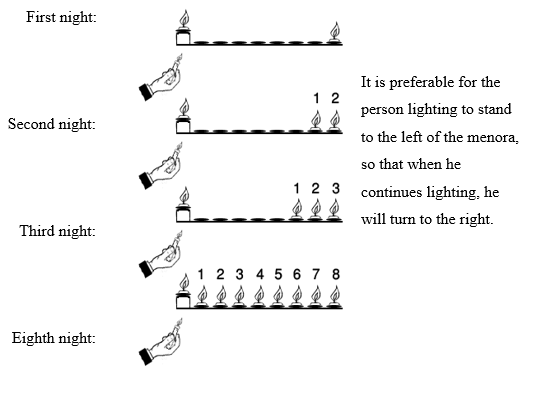
    07. Are Women Obligated to Hear Parashat Zakhor?

    According to most poskim, women are not obligated in the mitzva of remembering Amalek, because this mitzva is connected to the mitzva of annihilating Amalek. Since women are not commanded to wage war, they do not need to remember what Amalek did to us (Sefer Ha-ĥinukh §603). Others claim that the mitzva to wage war applies to women as well, as they must assist the soldiers. Therefore, they too are obligated to remember Amalek. And even though the Sages established a fixed time for reading Parashat Zakhor – the Shabbat before Purim – it has no set time according to Torah law. In light of this, it is a mitzva that is independent of time, and thus women are obligated to perform it (Minĥat Ĥinukh ad loc.).

    In practice, women are exempt from hearing Parashat Zakhor. Le-khatĥila, however, it is best for women to hear Parashat Zakhor, and many women do so in practice. A woman who finds it difficult to attend the services, but nevertheless wants to fulfill the mitzva, should read the passage herself from a ĥumash. After all, many authorities maintain that this fulfills the Torah commandment to remember Amalek. If there is a Torah lecture for women in the synagogue, it is permissible to take out a Torah scroll and read Parashat Zakhor for them. Even though no minyan is present, hearing Parashat Zakhor from a valid Torah scroll enhances the mitzva.[9]


    [9]. Reading Parashat Zakhor is not considered a time-bound mitzva because one can fulfill it by remembering Amalek once, and according to the Torah there is no set time for its performance. However, many poskim maintain that women are exempt because they do not go to war (Sefer Ha-ĥinukh §603). Torat Ĥesed §37 states that according to the view that the Torah does not require a yearly reading of Parashat Zakhor and that one can discharge his obligation through any form of remembrance, even once every few years, Parashat Zakhor is only a rabbinic mitzva, and consequently incumbent on men alone. Avnei Nezer, oĥ 509 and Marĥeshet 1:22 also maintain that women are exempt. Some authorities maintain that women are obligated in this mitzva, because even women must take part in a milĥemet mitzva – a mandatory war (Minĥat Ĥinukh). Radbaz (on mt, Laws of Kings 7:4) explains that women must supply the soldiers with food and water. Responsa Binyan Tziyon 2:8 adds that something positive will surely result from women remembering Amalek, just as when Yael killed Sisera, Esther put Haman to death, and Yehudit killed the Greek general.

    Therefore, le-khatĥila, women should hear Parashat Zakhor with a minyan. If that is impossible, someone should read it for them from a Torah scroll, without a minyan. If that, too, is unfeasible, they should read it to themselves from a ĥumash. While some Aĥaronim write that we do not take out a Torah scroll for the sake of women (Responsa Kinyan Torah 7:53; Halikhot Beitah 9:8), it is unclear what the problem is with this, since technically one may take out a Torah scroll in order to study from it. Some communities, therefore, have a custom to take out a Torah scroll and read Parashat Zakhor just for women.

    08. Can an Amalekite Save Himself or Convert to Judaism?

    Even though the Torah commands us to wipe out the descendants of Amalek, if an Amalekite agrees to observe the seven Noahide laws, he no longer has the status of an Amalekite, and one may not kill him. The seven Noahide laws are the prohibitions against idolatry, forbidden sexual relations, murder, theft, blasphemy, and eating the limbs of a live animal; and the obligation to set up a court system that will adjudicate all interpersonal disputes justly.

    Moreover, even if the Amalekites do not volunteer to observe the seven Noahide laws, we are commanded to offer them peace before waging war against them. That is, we offer them the opportunity to adopt the seven Noahide laws and to agree to be subservient to, and pay tribute to, the Jewish people. If they accept these conditions of peace, we do not wage war against them. If they refuse, however, we fight them until they are eradicated. Even if they reconsider afterward and beg for peace, we do not accept; once the war has begun, we fight them until they are eradicated (mt, Laws of Kings 6:1-4; Kesef Mishneh ad loc.).

    The poskim disagree about whether an Amalekite who wants to convert to Judaism may be accepted. Rambam (mt, Laws of Prohibited Sexual Relations 12:17) maintains that an Amalekite may convert. Accordingly, the Sages state that descendants of Haman, who was himself of Amalekite stock, taught Torah in Bnei Brak (Gittin 57b, San. 96b). Thus, our forebears accepted converts from the descendants of Amalek.

    Others assert that we do not accept Amalekite converts. This is the view of R. Eliezer, cited in the Mekhilta (end of Parashat Beshalaĥ), who relates that God swore by His Throne of Glory that an Amalekite who comes to convert should not be accepted. According to this position, Haman’s descendants were only allowed to teach Torah in Bnei Brak – as the Sages attest – as the result of an error: A rabbinical court accepted a convert without knowing that he is a descendant of Amalek. Alternatively, an Amalekite descendant of the wicked Haman raped a Jewish woman, and those Torah teachers from Bnei Brak descended from her son, who was considered Jewish (Resisei Laila 38:5).[10]


    [10]. Rambam maintains that we may accept converts from Amalek. According to him, the halakha does not follow R. Eliezer’s opinion in the Mekhilta (end of Parashat Beshalaĥ) because another opinion – that of R. Elazar Ha-Moda’i – is cited there as well, and because the Gemara’s account of Haman’s descendants runs counter to R. Eliezer’s view. So writes Ĥida (Ya’ir Ozen, Gimel:1). Ĥazon Ish (yd 157:5) states that R. Eliezer’s prohibition on accepting an Amalekite convert only applies during wartime. According to Avnei Nezer, oĥ 508, we may grant an Amalekite the status of ger toshav (a “resident alien,” a non-Jew who lives in Israel and adopts the seven Noahide laws), who is subservient to the Jewish people, but he may not become a regular convert.

    Others maintain that we do not accept the conversion of Amalekites, interpreting the statement that Haman’s descendants taught Torah in Bnei Brak in various ways. Some explain that the lineage of a non-Jew is determined by the father, and these teachers descended from Haman through a daughter (Mahari Engel, Gilyonei Ha-Shas, Gittin 57b; Maharsham 3:272). Others explain that, le-khatĥila, we do not accept Amalekite converts, but if they are accepted by accident, their conversion is valid (Yeshu’ot Malko, Likutim 15). Others maintain that the conversion is valid only if the mistake is discovered several generations later, but if a convert’s Amalekite origin is revealed immediately, the conversion is invalidated (Shvut Yehuda on the Mekhilta). Others maintain that the teachers descended from an Amalekite who assimilated into another nation and converted afterward. In such a case, it is impossible to know that he is from Amalek, and thus we accept him. Later on, it was revealed through divine inspiration that these teachers were descendants of Haman, but their conversion was still valid (R. Ĥayim Palachi, Einei Kol Ĥai, San. 96b). It is also possible that an Amalekite can divest himself of the status of Amalek by accepting the seven Noahide laws, and then, at a later stage, convert (suggested by Ĥida, Petaĥ Einayim, San. 96b). According to Reponsa Kol Mevaser 2:42, we may accept an Amalekite convert; the Mekhilta only prohibits such a convert from marrying into the Jewish people.

    09. Ta’anit Esther

    The custom of all Jewry, since the geonic period, is to fast on the thirteenth of Adar in commemoration of the fasts that Esther observed before approaching King Aĥashverosh to annul the decree against the Jewish people (Esther 4:16) and the fast that the Jews observed on the thirteenth of Adar of that year. The wicked Haman decreed that on the thirteenth of Adar, all Jews – young and old, children and women – be destroyed, massacred, and exterminated on a single day, and that their possessions be plundered. Because of the miracle of Purim, the hanging of Haman, and the rise of Mordechai and Esther, King Aĥashverosh issued a second letter allowing the Jews to defend themselves and kill their enemies on that same day. The original decree, however, was not rescinded, because a decree that was written and signed by the king could not be annulled. Therefore, the enemies of Israel also had permission to kill the Jews. In other words, the kingdom established the thirteenth of Adar as the day on which those who hated the Jewish people were permitted to kill them, but the Jews were also permitted to fight for their lives and kill their enemies as well. And even though Mordechai was already second in command to the king, the Jews were still in grave danger and in need of divine mercy to help them overcome and kill their enemies. Therefore, the Jews who could not fight stirred themselves to repentance and fasted that day, as is Israel’s practice in times of hardship. Indeed, there is no greater penitence than penitence that is achieved through fasting, as fasting purifies a person’s material side and returns his spirituality to its natural, central place.

    In commemoration of that fast, the Jewish people fast on the thirteenth of Adar every year. We still have enemies who want to destroy us and we still need to fast and repent every year anew.[11]

    In general, the laws of Ta’anit Esther (the Fast of Esther) are more lenient than those of the other minor fasts, because the other fasts were instituted by the Sages, whereas Ta’anit Esther was established by Jewish custom. In practice, though, there is almost no difference between them.[12]

    The laws regarding the prayers and Torah reading at Shaĥarit and Minĥa on Ta’anit Esther are the same as on all the minor fasts. The only difference is that we omit Taĥanun at Minĥa, since it is the day before Purim (mb 131:33). In addition, those who follow Ashkenazic custom and usually recite Avinu Malkeinu on fast days at both Shaĥarit and Minĥa do not do so at Minĥa on Ta’anit Esther. When the thirteenth of Adar coincides with Shabbat, we fast on the Thursday prior, and since the fast is not on the eve of Purim, we pray Minĥa as on all other fasts.


    [11]. The Rishonim ask how a fast could be established on the eve of Purim, as Megilat Ta’anit states explicitly that we do not fast or deliver eulogies on the day before a rabbinic holiday. Tosafot answer that since Megilat Ta’anit was repealed, the laws of the day before the holidays mentioned therein were also repealed. Ha-ma’or explains that we view the laws of Purim as if they were mandated by the Torah, which needs no reinforcement, and thus one may fast before Purim. Rosh and Ran point out that since the Book of Esther 9:31 alludes to this fast – “the matters of the fasts with their cries” – one may fast prior to the holiday. Beit Yosef §686 elaborates on this.

    [12]. Since Ta’anit Esther is based on custom, we are more lenient in cases of uncertainty. Thus, a woman is exempt from fasting on Ta’anit Esther for 24 months after giving birth. Even though the poskim dispute this law when it comes to the other minor fasts – most of them taking a more stringent approach, as explained above, 7:8 – there is room to rule leniently regarding Ta’anit Esther.

    A bride and groom during the seven-day period of joy after their wedding, as well as the main participants in a brit mila, must observe the other minor fasts but are exempt from fasting on Ta’anit Esther. This is stated in sht 686:16, Kaf Ha-ĥayim 686:16, 28, and Yeĥaveh Da’at 2:78. (According to the Vilna Gaon, they are exempt from all the minor fasts.) Rema 686:2 maintains that the main participants in a brit must fast on Ta’anit Esther, and many follow this ruling. With regard to a bride and groom, however, it is customary to be lenient.

    Rema 686:2 states that those who have severe eye pain need not fast on Ta’anit Esther, but they should make up the fast on a different day. Most Aĥaronim explain that even though those who suffer from eye pain are not considered truly sick, they may postpone their fast to a different day because they are in pain. This is not the case regarding the other minor fasts, on which one must fast even if he is in pain. In practice, it is difficult to distinguish between illness and pain. Mikra’ei Kodesh (Harari) ch. 3 n. 25 rules similarly, quoting R. Shaul Yisraeli and R. Mordechai Eliyahu, that those who suffer from eye pain have the same status as a sick person: They do not need to fast on Ta’anit Esther, nor do they need to make up the missed fast on a later date. Another difference, on the minor fasts, it is proper to be stringent and refrain from washing in warm water and playing music, as a sign of mourning over the Temple’s destruction (see above 7:2 and n. 3). On Ta’anit Esther, however, there is no reason to adopt this stringency.

    10. Commemoration of the Half-Shekel

    People customarily give charity in the month of Adar in commemoration of the half-shekel that each individual would donate to the Temple, in Adar, to fund public offerings. The best time to give this charity is immediately before Minĥa on Ta’anit Esther, so that the charity can combine with the fast to help one achieve atonement (mb 694:4, Kaf Ha-ĥayim 694:25).

    Some have a custom to give a coin worth half of the local currency unit, while others give three such coins, corresponding to the three times the word teruma (“donation”) appears in Parashat Shekalim (Rema 694:1). Thus, according to this custom, one should donate three half-shekels if in Israel, and $1.50 if in the US.

    Some customarily give the equivalent of the original half-shekel, which is the value of approximately ten grams of pure silver (Kaf Ha-ĥayim 694:20). All of these customs are valid, and the more charity one gives, the more commendable he is.

    Some maintain that this custom applies only to men above the age of twenty, because only they were obligated in the original mitzva to give the half-shekel for public offerings (Rema). Others maintain that boys above the age of thirteen must observe this custom as well (Tosafot Yom Tov). A third opinion maintains that one should give a donation in commemoration of the half-shekel for young children as well (Eliya Rabba, mb 694:5). Still others maintain that even women should give the half-shekel donation (Kaf Ha-ĥayim 694:27). The most prevalent custom today is to donate at least one half-shekel for every member of the house, even for an unborn child.

    One should not use money that was designated for ma’aser kesafim (the tithe of one tenth of one’s income that is set aside for charity) for this donation, since one may not fulfill an obligatory mitzva or custom from tithes. However, if one has always donated the commemorative half-shekel according to the most expensive custom and is now pressed for funds, making it difficult to observe his custom without relying on ma’aser kesafim money, he may donate from his own funds according to the more lenient opinion – that is, a half-shekel per male above the age of twenty – and make up the rest with ma’aser kesafim money.

    01. The Miracle of Purim

    The joy of Purim expresses the eternal sanctity of the Jewish people. Even though this sanctity is sometimes hidden by our sins, it never disappears. Jews, even when they sin, are still called God’s children, and nevertheless God directs the world and arranges events for their benefit, in order to save and redeem them.

    At the time of the Purim story, the Jewish people was in dire straits. The First Temple had been destroyed, and Israel had been exiled from its land. While Cyrus’s edict permitting the Jews to return to their land had already been declared, only a small minority actually did so. The Persian Empire ruled the world, and the large Jewish population living throughout the empire made an effort to assimilate and behave as the gentiles did, to the point where many were willing to bow down to an idol. In the capital city of Shushan, many Jews partook in Aĥashverosh’s feast and looked on as the Persians brought out the Temple vessels, which our enemies had pillaged at the time of the Temple’s destruction, and used them for mundane purposes. Yet they still enjoyed this wicked man’s feast. It seemed as though the great vision for which the nation of Israel was chosen was steadily vanishing; there would no longer be hope for a return to Zion. The Jewish people would no longer bring the word of God to the world.

    Then, a great accusation arose in heaven against Israel. Despite the fact that God chose Israel from among all the other nations, gave them His Torah, and manifested His presence in their midst, they were acting like the gentiles, bowing to an idol, and failing to go up to their land to build the Holy Temple. Therefore, the wicked Haman, a descendant of Amalek, arose and instigated the Persian Empire to enact a terrible decree against the Jews, the likes of which had never been seen before: “To destroy, massacre, and exterminate all the Jews, young and old, children and women, on a single day, on the thirteenth day of the twelfth month – that is, the month of Adar – and to plunder their possessions” (Esther 3:13).

    Incidentally, some Jews claimed against Mordechai that he was the cause of the evil decree: By refusing to bow to the wicked Haman, he stirred his wrath against all the Jews (ibid. 3:2-6).

    Ultimately it became clear that God controls events and had even already prepared the solution to the problem in advance, by arranging for Aĥashverosh to marry Esther. Thus, Mordechai and Esther were able to thwart Haman’s plan. Everything was reversed: Instead of Israel’s enemies carrying out their evil scheme, the Jews were able to kill their enemies, even hanging Haman and his sons on the very tree that he had prepared for Mordechai. The people of Israel experienced a great salvation; their prestige grew among the nations; and they mustered the strength to ascend to Eretz Yisrael, settle it, and build the Second Temple.[1]


    [1]. It emerges from Megilla 11b-12a that the Purim story happened after Cyrus’s edict but before the Jews were permitted to build the Temple. Furthermore, the evil decree was issued because they bowed down to an idol and derived pleasure from the wicked king’s feast. Many claim that Darius was the son of Aĥashverosh and Esther, and that thanks to Esther’s influence, Darius allowed the Second Temple to be completed after the enemies of the Jews disrupted its construction.

    02. Accepting the Torah Anew

    If we delve deeper, we will see that Haman’s decree actually stirred the singular quality, the segula, of the Jewish people. The decree made it clear that the Jewish people were willing to make great sacrifices in order to hold onto their faith. After all, they could have assimilated among the gentiles and saved themselves from annihilation. Nevertheless, they did not try to escape their Jewish destiny. On the contrary, the decree inspired them to repent and strengthen their faith and commitment to the Torah and the mitzvot.

    The events of Purim were so momentous that the Sages stated that Israel accepted the Torah anew at the time of Aĥashverosh. In a certain sense, their renewed commitment at that time was greater than their original acceptance of the Torah on Mount Sinai. When the Torah was first given, Israel was forced to accept it, as it says, “They took their places at the foot of the mountain” (Shemot 19:17). The Sages comment (Shabbat 88a):

    This teaches that the Holy One, blessed be He, overturned the mountain upon them like a cask, and said to them, “If you accept the Torah – good; if not – here shall be your burial.” R. Aĥa b. Yaakov said, “This furnishes a strong protest against the Torah” (since they accepted the Torah under duress, they are not obligated to uphold it). Rava said, “Even so, they re-accepted it at the time of Aĥashverosh, as it says, ‘The Jews upheld and accepted upon themselves” (Esther 9:27) – that is, they confirmed what they had accepted long before.”

    Many commentators explain that God “overturned the mountain upon them like a cask” in a symbolic, spiritual sense. After all the great miracles of the Exodus from Egypt, the splitting of the sea, and the awesome revelations at Mount Sinai, it was impossible for the Jews not to accept the Torah. However, the question still remained: Would the Jews stay connected to God and His Torah even afterward, when they become detached from those miracles and wonders? Indeed, there were ups and downs, until the events of Purim took place. That is when it became clear that the people of Israel’s connection to their faith and to the Torah were absolute. The terrible decree made it clear that the price of belief might be unbearable, but the Jews still chose to adhere to their faith, repent, and pray to God, without any coercion. Not only did they return to observe the 613 mitzvot, they even instituted additional mitzvot after they were saved: the mitzvot of Purim.

    Thus, we were privileged to build the Second Temple, and a door was opened for the advancement of the study of the Oral Torah, which was the main spiritual enterprise of the Second Temple era.

    3 – Establishing Purim as an Everlasting Holiday

    Even though the joy over the salvation was great, it was initially unclear how the event should be marked. Esther wrote to the Sages, “Write an account of me for future generations,” that is, write down the Purim story and include it as one of the holy books of the Tanakh. Esther further requested, “Establish me for future generations,” that is, establish the days of Purim for future generations as days of joy and reading the Megilla. At first, the Sages were unsure about this, both because it might arouse feelings of vengefulness among the nations of the world to see Israel rejoicing over their downfall, and also because they were uncertain whether it was appropriate to add to the Torah another description of Israel’s war against Amalek. In the end, they found scriptural allusions indicating that there are grounds to write about the battle of Amalek once again. Thus, the Men of the Great Assembly composed Megilat Esther (the Scroll of Esther) through divine inspiration and established Purim as a holiday for future generations (Megilla 2a, 7a; bb 15a).

    The Men of the Great Assembly (Anshei Knesset Ha-gedola) constituted the supreme beit din that functioned at the beginning of the Second Temple period. It was comprised of 120 elders, among them prophets and sages such as Ĥagai, Zekharia, Malakhi, Daniel, Ĥanania, Mishael, Azaria, Ezra the Scribe, Neĥemia b. Ĥakhalia, Mordechai (the same Mordechai that appears in Megilat Esther), and Zerubavel b. She’altiel. Ezra the Scribe was the most prominent of all, so much so that the Men of the Great Assembly are sometimes called “The Beit Din of Ezra the Scribe.” They were the great beit din that established the first major enactments that are considered rabbinic mitzvot, and they were the impetus for the continued activity of the Sages of the Oral Torah.

    The Purim miracle is considered the last miracle that was allowed to be recorded in the Tanakh, as the Sages state, “Esther is the end of all the miracles” (Yoma 29a). Thus, in effect, the writing of Megilat Esther concludes the Tanakh.

    Purim is the link that connects the Written Torah and the Oral Torah. This is reflected in the status of its mitzvot, which are considered divrei kabbala, an intermediate category between Torah commandments and rabbinic ones. On the one hand, they are not on the level of mitzvot that are written in the Pentateuch. On the other hand, they are not considered rabbinic mitzvot, since Megilat Esther is included in Scripture. The Rishonim disagree about how one should behave if an uncertainty arises regarding the laws of Purim: Does the halakha demand that one be stringent, as in cases of Torah commandments, or lenient, as in cases of rabbinic enactments?[2]

    One must perform seven mitzvot on Purim. Four of them are unique to Purim: 1) reading the Megilla; 2) mishlo’aĥ manot (sending gifts of food to a friend); 3) matanot la-evyonim (giving gifts to the poor); and 4) participating in a festive meal. The remaining three are rabbinic commandments that parallel rabbinic obligations on other holidays: 1) reading the Torah (for men); 2) commemorating the day by reciting Al Ha-nisim in our prayers and in Birkat Ha-mazon; and 3) refraining from fasting and delivering eulogies.


    [2]. Most Rishonim and Aĥaronim agree that the four special mitzvot of Purim have the status of divrei kabbala, which refers to laws that are derived from the words of the Prophets or the Writings, a category in between Torah law and rabbinic law. They only dispute the halakha in cases of uncertainty. At first glance, the fact that the Megilla is read on both the 14th and 15th where there is uncertainty about whether that location was walled at the time of Yehoshua bin Nun indicates that one must be stringent in cases of uncertainty, as we are with regard to Torah commandments. This appears to be the position of Rambam and sa 688:4, 696:7. According to Ramban, Rashba, and Ritva, however, we follow this practice only as a pious custom, not as an obligation, demonstrating that the status of these mitzvot is like that of rabbinic commandments. Several Aĥaronim are inclined toward stringentcy (Turei Even, mb 692:16, Kaf Ha-ĥayim 692:39). Another discussion is rooted in the same question: Does reading the Megilla override Torah commandments? Most authorities, including Rema 687:2, maintain that reading the Megilla does not override such mitzvot, but Taz rules that it does.

    04. Walled and Unwalled Cities

    There is a unique halakha pertaining to Purim: it has two dates. In most places, Purim is celebrated on the fourteenth of Adar, while in cities that were surrounded by a wall at the time of Yehoshua bin Nun, and in Aĥashverosh’s capital city of Shushan, it is celebrated on the fifteenth.

    In order to understand the reason for this distinction, we must first recall the order of events. Haman’s decree stated that on the thirteenth of Adar all the enemies of Israel could destroy, massacre, and exterminate all the Jews throughout the world. This decree was not abolished even after Mordechai and Esther’s amazing rise to power, because by law any decree written in the king’s name and sealed with the king’s signet could not be revoked. Therefore, the only thing they could do was to issue an additional edict, also sealed with the king’s signet, allowing the Jews to defend themselves and kill their enemies.

    Until the thirteenth of Adar, it was unclear how matters would develop. Granted, the Jews had permission to defend themselves without interference from the Persian army, but who knew if they would succeed in defeating their enemies? Then, on the thirteenth of Adar, fear of the Jews fell upon the people of the land, and the Jews were able to defeat their enemies. On the next day, the fourteenth of Adar, the Jews rested from battle, making it a day of feasting and joy. In the capital city of Shushan, however, there were so many enemies of Israel that the Jews were unable to kill them all in one day. Therefore, Queen Esther came before King Aĥashverosh and asked him to grant the Jews permission to take revenge against their enemies for one more day. Once he agreed to Esther’s request, the Jews of Shushan continued eradicating their enemies on the fourteenth of Adar and rested on the fifteenth, making it a day of feasting and joy.

    Since the first Purim was celebrated on two separate days, the Sages perpetuated this feature with their enactment. Therefore, in most places, Purim is celebrated on the fourteenth of Adar, whereas in Shushan, where the miracle was greater because all the events of the Megilla occurred there, and because the Jews took revenge against their enemies there for two days, Purim is celebrated on the fifteenth. The Sages also enacted that in all prominent cities like Shushan, Purim should be celebrated on the fifteenth, and the indicator of a city’s prominence is having a wall, like Shushan did.

    At that time, however, Eretz Yisrael was in ruins, and if they had based their observance of the enactment on the state of cities at that time period, there would not be one city in all of Eretz Yisrael whose residents would celebrate Purim on the fifteenth of Adar, because none of them was walled at the time. Therefore, in honor of Eretz Yisrael, the Sages decided that in all cities that were surrounded by a wall at the time of Yehoshua bin Nun, Purim would be celebrated on the fifteenth of Adar, even if they were currently in ruins, while in all other cities, Purim would be celebrated on the fourteenth. The only exception is Shushan, as even though the city was established after Yehoshua’s time, Purim is celebrated there on the fifteenth, since the miracle occurred there.

    Today, Jerusalem is the only city in which Purim is celebrated on the fifteenth of Adar, because it is the only place about which we have a clear tradition that it was surrounded by a wall at the time of Yehoshua bin Nun. Regarding some cities it is uncertain whether or not they were walled at that time. There is even uncertainty about Shushan’s exact location. We will elaborate on these laws in chapter 17.[3]


    [3]. See Beit Yosef 688:1; the main idea is based on Ran, and many poskim concur, including mb. The author of Beit Yosef himself explains that the main purpose of the distinction between the fourteenth of Adar and the fifteenth of Adar is to honor Eretz Yisrael and mention it on Purim. See Maharal’s Or Ĥadash 9:11-16 for a discussion on the prominence of walled cities.

    Rav Kook explains, in Mitzvat Re’iyah, oĥ 688:1, that the Sages instituted two days of Purim in order to differentiate between Torah commandments, whose times are fixed for everyone, and rabbinic laws, which can have two times, depending on one’s location. Perhaps this is also why they established different levels of embellishment (mehadrin) with regard to lighting the Ĥanuka candles. And since we find that the Torah distinguishes between walled and unwalled cities (Vayikra 25:29; Kelim 1:7), the Sages made this same distinction on Purim. Furthermore, since all Torah laws relating to walled cities apply only in Eretz Yisrael, they established Purim according to when these laws began to take effect, namely, when the Israelites entered the land at the time of Yehoshua bin Nun. See Mitzvat Re’iyah, loc. cit., where R. Kook elaborates on the matter.

    Chapter Contents

    Peninei Halakha We use cookies to ensure the website functions properly and improve user experience. You can choose which types of cookies to enable.
    Cookie Selection