
The basic principle in the laws of seed kilayim is that two species may be planted near one another when they remain visibly distinct, but not when they appear mixed together. The larger the field, the greater the required separation, so that the distinction between the species remains recognizable. The required separation also depends on the density, size, and length of the plants’ leaves: grain, whose stalks grow tall, requires a greater separation, while vegetables generally require a smaller one, except for vegetables with especially large leaves.
Vegetables: By Torah law, one must leave one tefaḥ – approximately 8 cm – between one vegetable species and another. The Sages extended the required separation to one and a half tefaḥim – approximately 12 cm. If that distance was left between the two species, there is no prohibition against kilayim even if their branches later grow until they touch, since the stems emerging from the ground remain properly separated. There are a few exceptions, such as gourds, whose leaves are especially large and tend to intertwine with neighboring species. In such cases, one must ensure that the leaves of the two species do not touch. These rules apply to beds in a garden. Two vegetable fields, however, must be separated by a square area one ama by one ama – approximately half a meter by half a meter. Along the rest of the boundary between the fields, it is proper to leave a gap of one tefaḥ.[3]
Grain: Since grain is normally sown over large areas, greater separation is required. By Torah law, the required distance is one ama. The Sages, however, ruled that this distance is adequate only for small plantings less than one ama wide. For grain sown in medium-sized plots, known as a meishar, whose width is at least one ama, the separating area must begin with a square of two amot by two amot – approximately one meter by one meter – and may then taper diagonally, as illustrated below, until only a minimal gap remains between the fields.
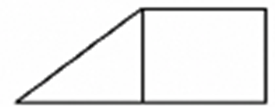
When grain is sown in large fields, as is usual, the required separation is a beit rova, a square of about five meters by five meters. Along the rest of the boundary, it is proper to leave a one-ama gap running the length of the two fields.[4]
Authorities disagree whether legumes are treated like grain or like vegetables. Therefore, one must leave one ama between the two plantings, regardless of the field’s size.[5] When grain is sown next to vegetables or legumes, or vegetables are sown next to legumes, the required separations are more complex and depend on the size of the field. In any case, the requirement is no stricter than for grain.
If a partition ten tefaḥim high – approximately 80 cm – stands between two fields, no further separation is needed. This is true even of a reed partition, provided that no gap between reeds exceeds three tefaḥim; the partition itself separates the fields. Even if the roots of the two species are known to intertwine underground, there is no kilayim prohibition so long as the partition creates a visible separation. Similarly, a road four amot wide – about 1.84 meters – or a plowed strip of the same width separates the fields, so the large five-by-five-meter beit rova separation is not required.
[3]. According to most Rishonim and Aḥaronim, one tefaḥ suffices by Torah law to separate vegetables, but the rabbinic requirement is one and a half tefaḥim. This is the view of R. Ḥananel, Rambam, Rash, Rosh, R. Ovadia of Bartenura, Kaftor Va-feraḥ, SA YD 297:34, and others. Others maintain that the rabbinic requirement is three tefaḥim (Rashi; Rabbeinu Tam; Ritva). According to the Vilna Gaon, it is six tefaḥim. Still others maintain that even rabbinically, one tefaḥ suffices (Geonim; R. Sa’adia Gaon).
A garden bed for which a separation of one and a half tefaḥim suffices is one that is no more than one ama long – six tefaḥim, or about half a meter. A field, by contrast, requires a separation of one square ama. According to Ḥazon Ish, this category begins with an area of a beit rova, about 22 square meters – 10.2 amot by 10.2 amot. According to R. Yisraeli, it begins only with a beit tish’a kabin, about 780 square meters. If the planted area is larger than a garden bed but smaller than a field, Ḥazon Ish requires either a separation of one and a half tefaḥim or a furrow one tefaḥ deep and one tefaḥ wide. According to R. Yisraeli, however, a furrow is always required. According to Rash, the furrow must run along the entire planted area. According to Rambam, the furrow need only run for six tefaḥim; after that, a gap of one tefaḥ is sufficient.
The precise measurements are as follows: one tefaḥ is 7.6 cm; one ama – six tefaḥim – is 45.6 cm; and a beit rova is ten and one-fifth amot by ten and one-fifth amot, or 4.65 meters by 4.65 meters (Peninei Halakha: Sukkot 2, note 1). SA YD 296:68 explains that with respect to kilayim, these measurements should be expanded and calculated as generous measures of tefaḥ and ama. Therefore, in the practical measurements given above, we rounded upward: a tefaḥ to 8 cm, following R. Ḥayim Na’eh’s measure, and an ama to half a meter.
[4]. Field: As explained in the previous note regarding vegetables, the minimum size of a “field” is about 22 square meters according to Ḥazon Ish, and about 780 square meters according to R. Yisraeli; the latter view appears correct. The Yerushalmi states (Kilayim 2:4) that for a meishar – a small grain field more than one ama wide – the separation between two meisharim is a square of two amot by two amot, after which it tapers diagonally until only the smallest gap remains.
Ḥazon Ish and Tiferet Yisrael disagree over whether this same diagonal tapering is required after the other square separations as well: the one-ama square between vegetable fields, and the beit rova – roughly ten amot by ten amot – between grain fields. According to Ḥazon Ish (Kilayim 6:1:1), after the square, the separation must continue diagonally until it narrows to a minimal gap; beyond that, no further separation is needed. According to Tiferet Yisrael (Kilayim 2:73), the square separation itself is sufficient, and once it ends, the two species may be planted immediately next to one another.
My teacher, R. Yisraeli, held that Tiferet Yisrael’s view is the primary law. Nevertheless, in practice, it is proper to leave the separation required by Torah law along the entire length of the field: one tefaḥ between vegetable species and one ama between grain species. This also appears correct in practice, since the basic principle of seed kilayim is that the species must remain visibly separated from one another.
[5]. According to my teacher, R. Yisraeli, legumes are governed by the laws of vegetables, but even where vegetables require only one and a half tefaḥim, legumes require a furrow (Eretz Ḥemda, pp. 85, 144–149). According to Ḥazon Ish, legumes are governed by the laws of grain (Kilayim 6:2; 8:2), so out of concern for the Torah-law requirement, one must be stringent and leave one ama even in small areas. In large fields, however, one ama suffices: this is the Torah-law separation, and doubts about the additional rabbinic separation are ruled leniently (Hilkhot ha-Aretz, Kilayim 5:14).